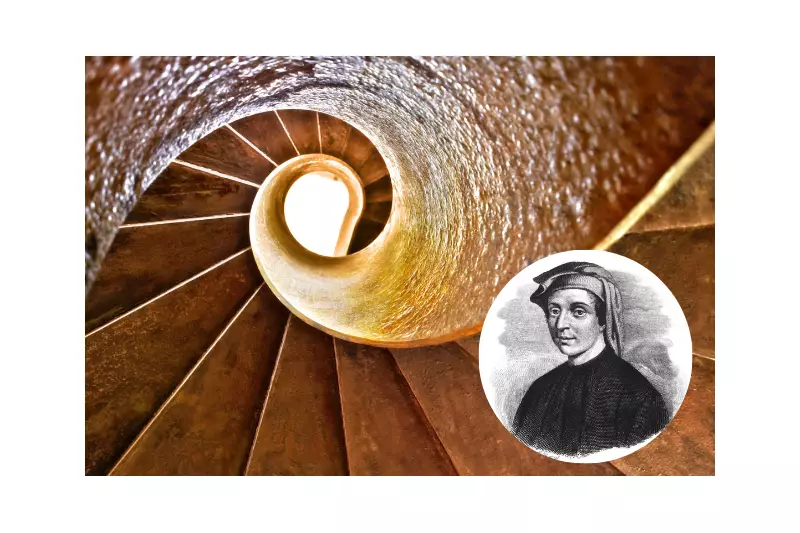
For mathematicians, artists, and pattern enthusiasts, 23 November marks a very special occasion: Fibonacci Day. This annual celebration honours the simple yet profound numerical sequence that many consider to be nature's fundamental building block.
The Man Behind the Numbers: Leonardo Fibonacci
The day pays tribute to Leonardo Pisano Bigollo, the Italian mathematician born around 1170 who introduced this revolutionary sequence to Western mathematics. Historians regard him as the most talented Western mathematician of the Middle Ages, though his greatest legacy wasn't the sequence itself but his role in popularising the Indo-Arabic numeral system across Europe.
Before Fibonacci's work, Europe struggled with cumbersome Roman numerals. Through his extensive travels with his father around the Mediterranean, Fibonacci encountered the superior numbering system used by traders in North Africa and the Middle East. His championing of this system, complete with the decimal point and the crucial concept of zero, laid the groundwork for modern commerce and scientific calculation that would define the Renaissance and beyond.

From Rabbit Problem to Universal Principle
Fibonacci first introduced his famous sequence in his 1202 book Liber Abaci (The Book of Calculations), using it to solve a practical problem about rabbit population growth. His hypothetical scenario asked how many pairs of rabbits would exist after a year starting with one newborn pair, with specific conditions about maturation and reproduction rates.
The solution generated what we now know as the Fibonacci sequence: 1, 1, 2, 3, 5, 8, 13, 21, 34, 55 and so on. The elegant rule governing this progression states that each new number equals the sum of the two preceding numbers.
While the rabbit problem itself was somewhat unrealistic, the numbers it generated have proven astonishingly accurate in describing growth patterns throughout the natural world.
The Golden Ratio: Nature's Aesthetic Blueprint
The sequence's enduring significance comes from its profound connection to the Golden Ratio, represented by the Greek letter Phi and valued at approximately 1.618. When you divide any number in the Fibonacci sequence by its immediate predecessor, the result gradually approaches this magical proportion.
This ratio, often called the 'Divine Proportion', has been celebrated for millennia as representing the most visually pleasing relationship between two parts. It forms the foundation of countless artistic and architectural masterpieces, from the proportions of the Parthenon in Athens to the placement of figures in paintings by Leonardo da Vinci.
In essence, the Fibonacci sequence serves as nature's closest whole-number approximation to this universal standard of beauty.
Finding Fibonacci in Our World
The sequence's uncanny appearances throughout nature and human culture have earned it the nickname 'nature's secret code'.
In the natural world, the sequence describes the most efficient way to pack seeds, leaves, and petals. You'll find Fibonacci numbers in the petal counts of common flowers – three for lilies, five for buttercups, eight for delphiniums. The spirals in sunflower seed heads, pineapple scales, and nautilus shell chambers all adhere strictly to this progression to maximise efficiency and sunlight exposure.
In human culture, the sequence has inspired creators across disciplines. Progressive metal band Tool famously used the sequence to structure their 2002 single Lateralus, incorporating it into both syllable counts and time signature changes. Dan Brown's blockbuster novel The Da Vinci Code used the numbers as a crucial cipher, introducing the sequence to millions of new admirers. Even financial traders use ratios derived from the sequence to analyse market movements.
Whether you're counting petals in your garden or marvelling at architectural wonders, Fibonacci Day offers a moment to appreciate how this simple sequence – discovered through counting rabbits – continues to reveal the hidden harmonies of our universe.