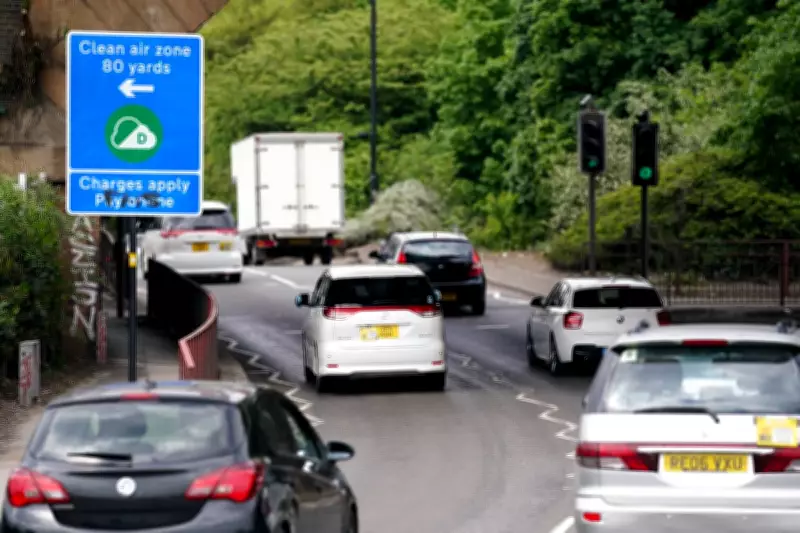
Birmingham City Council has paid itself more than £470,000 in fines and charges after its own vehicles breached the city's clean air zone (CAZ) rules. The figures, obtained through a Freedom of Information request, reveal that between June 2021 and March 2024, the council incurred 13,239 penalty charges for non-compliant vehicles entering the zone.
Council's Fleet Non-Compliance
The council's fleet, including refuse trucks and other service vehicles, failed to meet the emissions standards required to avoid charges. The total amount paid in penalties and administrative fees reached £470,830. Despite being the enforcing authority, the council is not exempt from the charges and must pay the same fees as any other driver or business.
Response from the Council
A spokesperson for Birmingham City Council acknowledged the issue, stating: "We are committed to improving air quality in Birmingham and ensuring our own fleet complies with the clean air zone standards. We have been working to replace older vehicles with cleaner alternatives, but this process takes time. The fines paid are a result of legacy vehicles that are being phased out."

The council has since accelerated its fleet renewal programme, with a focus on electric and low-emission vehicles. As of 2024, more than 40% of the council's fleet meets the CAZ standards, and the number of penalty charges has been decreasing month on month.
Public Reaction
The news has sparked criticism from opposition councillors and residents, who argue that the council should set an example. Councillor Robert Alden, leader of the Conservative group, said: "It is unacceptable that the council is effectively fining itself while taxpayers foot the bill. This money could have been spent on essential services."
Environmental groups, however, have defended the CAZ, noting that it has significantly reduced pollution levels in the city centre. The zone, introduced in June 2021, charges non-compliant vehicles £8 per day for cars and vans, and £50 for buses, coaches, and lorries.
Future Plans
The council has outlined plans to achieve a fully compliant fleet by 2025, with a £20 million investment in electric vehicles and charging infrastructure. It also encourages other businesses and residents to take advantage of grants and scrappage schemes to upgrade their vehicles.
The clean air zone remains a key part of Birmingham's strategy to tackle air pollution, which contributes to hundreds of premature deaths in the city each year.