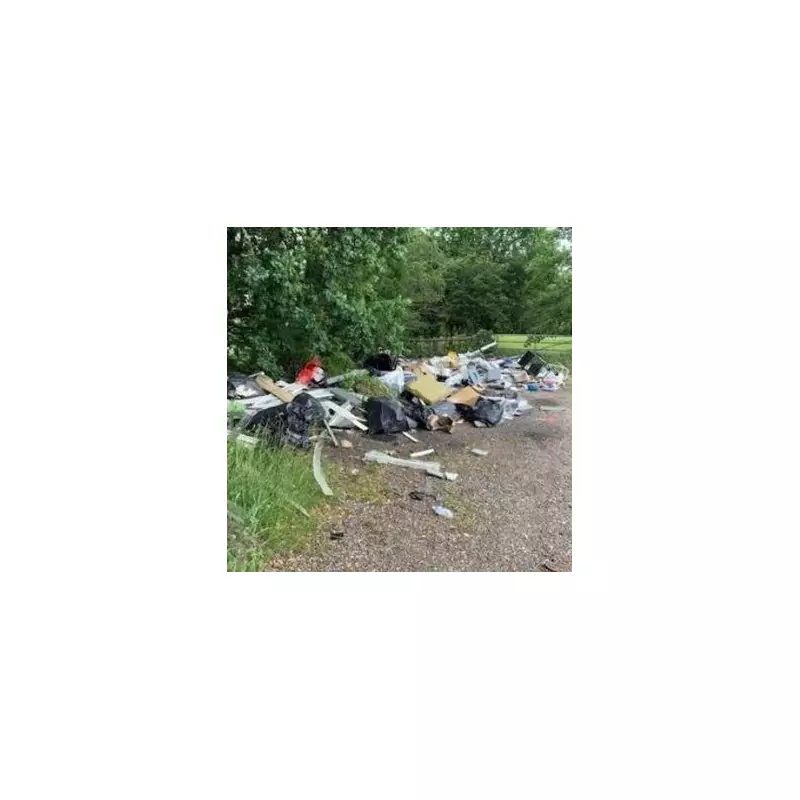
Solihull is set to launch a major crackdown on illegal waste dumping after official figures revealed thousands of fly-tipping incidents were recorded in a single year.
Scale of the Fly-Tipping Problem
New data presented to councillors shows that 3,024 fly-tipping incidents were reported across the borough in the 2024-2025 period. While this marks a decrease of 752 cases compared to the previous year, the volume remains alarmingly high.
Despite the sheer number of incidents, enforcement action was limited by resources. The council's regulatory services team, which currently has just one dedicated investigating officer, managed to investigate 140 cases. This led to three prosecutions and seven fixed penalty notices.

Officer Louise Baggott, the council's head of regulatory services, highlighted the challenge. "There is recognition that we do what we can with the resources we have got," she told the stronger communities and neighbourhood services scrutiny board on November 11.
Call for a Coordinated Strategy
The meeting heard that a formal illegal waste strategy is now deemed essential to create a "consistent approach" to tackling the problem. Proposed measures include improving the reporting and recording of incidents and deploying both overt and covert cameras to catch offenders in the act.
Councillors expressed strong public sentiment against the crime. "We see social media, everybody hates fly-tipping," said Councillor Bob Grinsell, who also called for better feedback to ward councillors when residents report clear evidence.
The issue has been exacerbated by external factors. Councillor Laura McCarthy noted a "huge increase" in her ward, partly attributed to the bin strike in neighbouring Birmingham. Council officers confirmed they had received tips of waste originating from Birmingham due to the industrial action.
Challenges and Future Plans
A significant hurdle identified is witness reluctance. Ms Baggott explained that people who see fly-tipping often feel "unhappy to give witness statements or further details because of repercussions."
To combat this, the council is exploring ways to leverage technology. Councillor Shesh Sheshabhatter asked if officers were encouraging residents to share doorbell camera or smartphone footage. Officers confirmed they do follow up on such evidence when possible.
While more resources were acknowledged as beneficial, Councillor Alan Feeney questioned the effectiveness of simply adding staff without a strategic shift. The board ultimately agreed to support the development and future adoption of a comprehensive illegal waste strategy to tackle the blight of fly-tipping across Solihull.