Soaring temperatures have brought a wave of activity to the dune system, with some of the most dynamic residents beginning to appear in numbers. Dragonflies are a remarkable group of species and seem to electrify the air over pools and slacks once hot weather arrives, especially when the sun breaks through.
Early Emergence and Abundance
The first dragonflies emerged a few weeks ago, with the lovely Four-spotted Chaser, probably the most abundant dragonfly in the dune system in early summer, having been on the wing for at least a fortnight. However, emergence accelerates as temperatures pick up.
Many species have actually been active for some time. The larvae that inhabit debris at the bottom of dune slacks begin climbing reed stems in preparation for metamorphosis into stunning aerial predators as early as late April. These sinister-looking creatures lack the elegance of a flying adult but are formidable predators nonetheless. They lurk in the depths of pools, waiting to catch a wide range of prey, from tiny invertebrate life to Natterjack tadpoles in later summer.

Importance of Protecting Dune Ecosystems
While most visitors understand that it is imperative to keep dogs out of flooded areas in the dunes as amphibians emerge to breed in spring and summer, it is also important to avoid disturbance to other pondlife. Pets entering the water cause disturbance to these delicate ecosystems. When flea treatments start to enter the water, the effect can be devastating, as these powerful insecticides have the potential to cause long-term damage to pondlife. Therefore, it is crucial to keep dogs out of all flooded areas and pools in the dunes, whether fenced or not, and to enjoy the spectacle of adult dragonflies patrolling as the weather warms up.
Notable Species to Watch
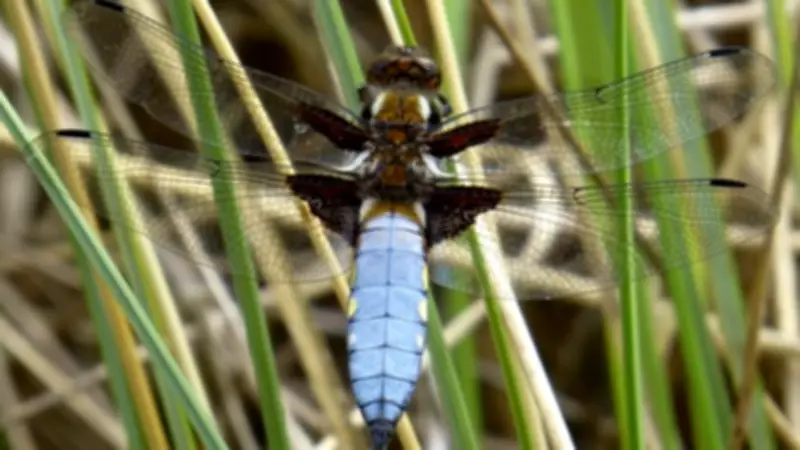
Watch out for jewel-like Broad-bodied Chasers, the males being a dazzling blue, or the wonderful Emperor Dragonfly, our largest species. The Emperor circles over pools at a height of one or two metres, rarely pausing as it hunts for prey, which can include other dragonflies. I have even seen this uber-predator take a Dark Green Fritillary Butterfly at Ainsdale, no mean feat considering that this is our biggest butterfly. It is an impressive experience of wildlife red in tooth and claw, although not so impressive for the poor Fritillary, which was pulled to the ground by the Emperor and despatched, leaving only a disembodied pair of wings as evidence of its fate.
Damselflies and Climate Change
Much smaller, but no less enchanting, damselflies can also be found around dune pools. Common Blue, Azure, Emerald, and Blue-tailed damselflies are relatively easy to find as they cluster in the shelter of vegetation or skim low over the surface. A warming climate means more species are expanding their ranges northward. In recent years, Small Red-eyed Damselfly has appeared at several sites in our area for the first time, and new arrivals are always eagerly anticipated. Willow Emerald Damselfly is spreading rapidly in the UK now, so it may be the next addition to Sefton’s dragonfly list.
John works for Green Sefton, the Sefton Council service that brings together the Coast and Countryside, Parks and Greenspaces, and Grounds Maintenance teams for a joined-up approach to the vital management, development, and oversight of Sefton’s beautiful coastline, parks, and green spaces. This column looks at the flora, fauna, and history of the coastline, and the work carried out to protect it.