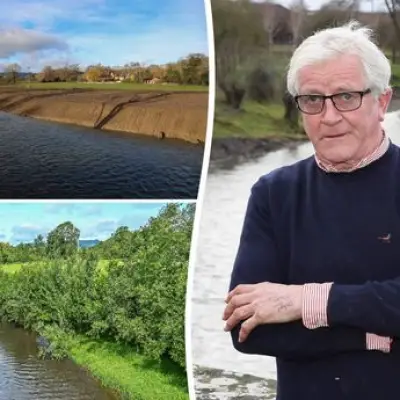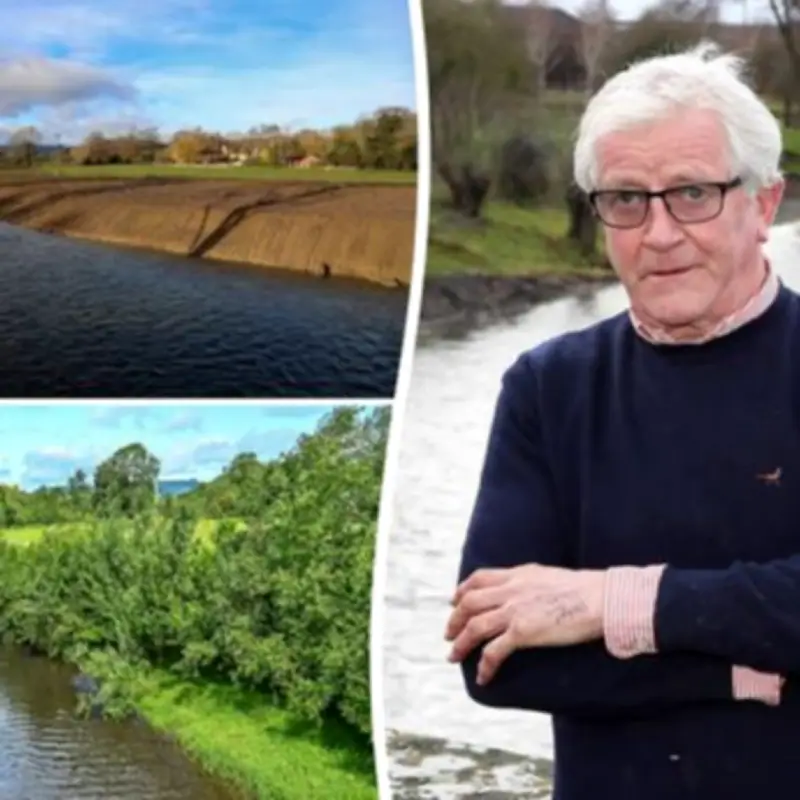
Striking before-and-after photographs have revealed the dramatically altered landscape of a picturesque Midland location that was "completely obliterated" by a farmer. The new images of the River Lugg in Herefordshire have prompted ecologists to warn that it could take as long as 30 years for the area to fully recover.
Farmer John Price used an 18-tonne digger to dredge a stretch of the river near Leominster in 2020, stripping a mile-long section of its bank of trees. He was handed a 12-month prison sentence, later reduced to ten months on appeal, with a judge stating he had committed "ecological vandalism on an industrial scale" along one of Britain's most significant salmon rivers. Price unlawfully extracted tonnes of gravel from the riverbed to construct a road and horse yard at his property while felling 71 trees.
Destruction and Regeneration
The farmer claimed he acted to safeguard residents in a hamlet whose properties had been ravaged by flooding and to address riverbed erosion. However, the Environment Agency described the destruction as one of the most severe cases of riverside devastation it had encountered, resulting in a "devastating" impact on wildlife that continues six years later. Images captured at the time and at the identical location this week showed the surrounding landscape had begun to regenerate, with trees, shrubs, and vegetation gradually returning. But it was said there were "no signs of life" in the river, and an ecologist estimated it would take between 20 and 30 years to fully recover.

Environmental designer Richard Fishbourne said: "It is quite disturbing to see how much damage one person can cause in a couple of days. When I went down recently there was no sign of any fish where you would usually expect to see minnows, graylings, trout, and salmon. There's just no sign of life - there's nothing in the water here now, and it has become an impoverished landscape. It can take decades to build up this wonderful community of species and habitat, but it can all be destroyed in a moment of insanity." He added that the amount of gravel taken just to build a road was shocking, and the biodiversity required for these species to thrive again could take decades. "It will take 20 or even 30 years to come back to anywhere near the extent it was. When I was a kid, we used to go fishing a bit further upstream, but the river is nothing like that anymore, and that is due in part to intensive agriculture, which we must also get a handle on."
Positive Signs Amidst the Damage
Fishbourne noted some positive signs: "Some of the new natural regeneration is one positive, and if you let Mother Nature flourish, she will work her magic, but this is going to take a very long time. It's really important to have a mix of biodiversity in this space." Emma Johnson, West Midlands deputy director for Natural England, said: "The damage to the River Lugg is a serious environmental concern, and the site and its associated wildlife will take a long time to fully recover to a healthy state." Environment Agency and Natural England monitoring confirms the river's condition is improving, with trout, bullhead, and minnows present, alongside key indicator species such as kingfishers and sand martins.
Price, from Kingsland, Herefordshire, admitted seven charges of damaging the river, a Site of Special Scientific Interest, at Kidderminster Magistrates' Court in April 2023. The Environment Agency and Natural England said habitats for "iconic wildlife", including otters, kingfishers, and salmon, had been destroyed along a 1.5-kilometre section of the waterway. Price was convicted of seven offences connected to breaching a Natural England stop notice. He was also ordered to pay £600,000 and instructed to replant trees and restore the riverbed and bank.