Millions of households across the United Kingdom are poised to benefit from a transformative £15 billion Warm Homes Plan, heralded by ministers as the most ambitious home upgrade initiative in the nation's history. This flagship programme is designed to deliver comprehensive energy efficiency and clean technology improvements to as many as five million homes by the year 2030.
Substantial Savings and Poverty Reduction
The scheme aims to generate significant annual savings on energy bills for families, potentially reducing costs by hundreds of pounds each year. A core objective is to lift approximately one million households out of fuel poverty, providing much-needed financial relief and enhanced living standards.
Targeted Support for Vulnerable Families
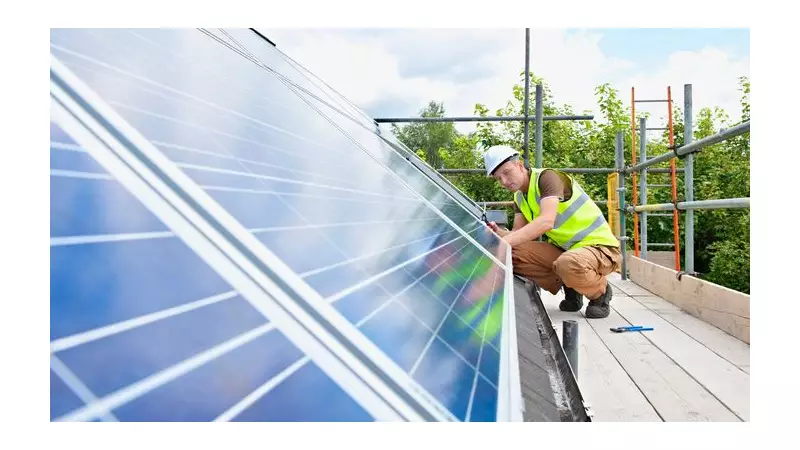
Low-income and fuel-poor households will qualify for fully funded upgrade packages, which may include essential insulation measures and the installation of clean technologies. These technologies encompass solar panels, modern heat pumps, and advanced battery storage systems.

Officials have indicated that the most comprehensive support for the poorest families could involve solar panel and battery installations valued at up to £12,000, with the exact package tailored to the specific characteristics of each property.
Financial Assistance for Homeowners
Alongside the free upgrades for qualifying households, the government will introduce accessible financing options for a broader range of homeowners. Individuals will be able to apply for government-backed loans with low or zero interest rates to fund the installation of solar panels, batteries, and heat pumps.
Furthermore, the existing £7,500 universal grant for replacing traditional gas boilers with eco-friendly heat pumps will continue to be available. The government has explicitly confirmed that there will be no ban on boilers, maintaining consumer choice while incentivising greener alternatives.
Programme Structure and Funding Allocation
The Warm Homes Plan is being spearheaded by the Department for Energy Security and Net Zero (Desnz). Its primary goals are to diminish reliance on fossil fuels, substantially cut carbon emissions, and achieve a permanent reduction in household energy expenses.
The comprehensive £15 billion funding package includes specific allocations for the devolved governments in Scotland, Wales, and Northern Ireland, ensuring a coordinated national effort.
A detailed breakdown of the funding reveals:
- £5 billion dedicated to schemes supporting low-income households.
- £2 billion allocated for consumer loans to facilitate upgrades.
- £2.7 billion for the continuation of the Boiler Upgrade Scheme.
- £2.7 billion for a newly established Warm Homes Fund to support innovative financing models.
- £1.1 billion designated for the development of heat networks.
- £1.5 billion in additional funding, including support for devolved administrations.
Additional Bill Support and Housing Protections
In a related measure, approximately six million households receiving means-tested benefits will be eligible for a £150 Warm Home Discount applied directly to their electricity bills. This discount supplements previous budgetary announcements aimed at reducing average energy bills by £150 starting in April.
The plan also introduces strengthened protections for tenants in the rental sector, coupled with new support mechanisms for landlords to undertake energy efficiency improvements. Officials highlighted the potential for whole streets of social housing to be upgraded simultaneously, maximising efficiency and impact.
New regulations under the Future Homes Standard will mandate the installation of solar panels as a standard feature on all new-build homes, embedding sustainability into future housing stock.
Transition from Previous Schemes and New Governance
This initiative coincides with the conclusion of the long-running Energy Company Obligation (ECO) scheme in March, a programme that had faced criticism over substandard insulation work in thousands of properties.

To oversee the delivery of the new plan, a dedicated Warm Homes Agency will be established. Local mayors are expected to play a pivotal leadership role in coordinating and rolling out improvements within their respective regions.
Ministers have also articulated a clear ambition for domestic manufacturing, aiming for at least 70% of the heat pumps installed across the UK to be produced within the country.
Ministerial Statements and Vision
Prime Minister Sir Keir Starmer emphasised the fundamental importance of the plan, stating, "A warm home shouldn't be a privilege, it should be a basic guarantee for every family in Britain. Today's plan marks a turning point. It will help to slash energy costs and lift up to a million people out of fuel poverty."
He added, "This is a government bearing down on the cost of living crisis. By driving bills down for good and upgrading millions of homes, we're giving people the security and the fair shot they need to get on in life."
Energy Secretary Ed Miliband addressed the urgent need for action, remarking, "It is a scandal that millions of people in our country do not have the security of a home that is warm, affordable and safe. With this investment, we embark on a national project to turn the tide - waging war on fuel poverty and taking another step forward in tackling the affordability crisis for families throughout Britain."
Reactions from Campaigners and Industry
Campaign groups have broadly welcomed the announcement while cautioning that further reforms may still be necessary to address the scale of the challenge.
Simon Francis, coordinator of the End Fuel Poverty Coalition, commented, "The lifeblood of the Warm Homes Plan amounts to a rescue mission for the coldest, dampest homes in Britain - and this must be the priority. Combined with long-overdue improvements to conditions in the private rented sector, it could save lives, cut NHS costs and permanently slash energy bills for those in fuel poverty."
Russell Dean, deputy divisional manager at Mitsubishi Electric, offered an industry perspective, noting, "The plan to offer interest-free loans for heat pumps is a welcome step to further reduce upfront costs, and the continuation of the Boiler Upgrade Scheme shows that the Government is serious about making heat pumps a realistic option for more of us."
Environmental Advocacy and Calls for Robust Implementation
Environmental organisations have stressed the critical importance of ensuring the plan is fully funded and includes strong consumer protections to guarantee that upgrades deliver lasting financial savings and improved living conditions.
Mike Childs, head of policy at Friends of the Earth, stated, "The warm homes plan is a welcome step forward, with tougher standards for rental homes and £5bn to help councils and social landlords install insulation and clean energy like solar panels. But without more investment it will fall far short of what's needed to protect people's health and end the scandal of families forced to live in cold, damp homes."
The launch of the Warm Homes Plan represents a significant governmental intervention aimed at tackling the intertwined issues of high energy costs, fuel poverty, and carbon emissions, setting a new benchmark for national home improvement programmes.