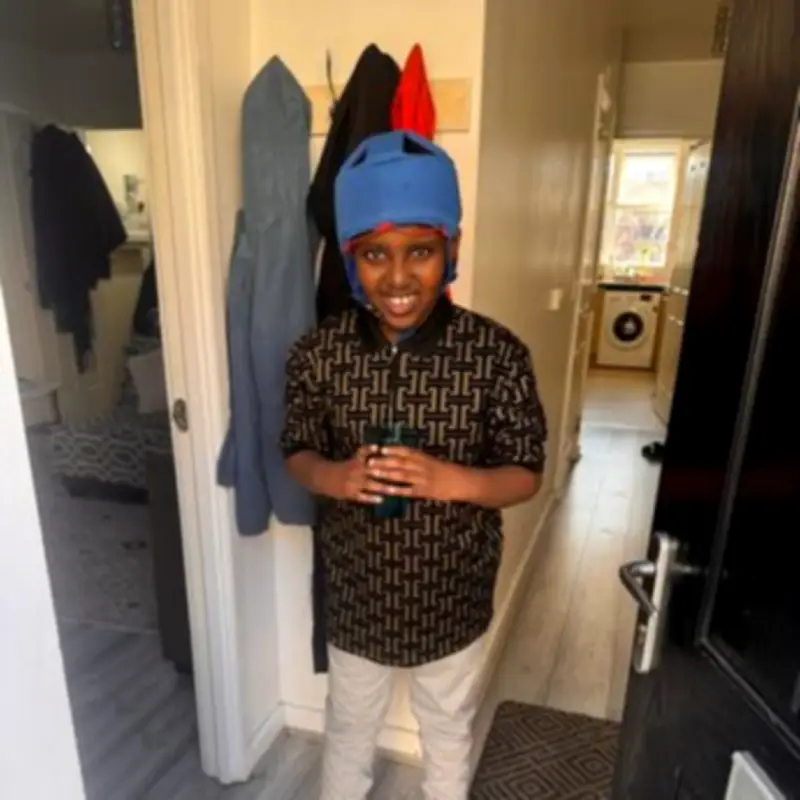
A Birmingham father has spoken of his terror upon discovering his son has a life-limiting condition, Dravet Syndrome, which affects approximately one in every 15,000 live births. Adam Shirwa, who lives in Rubery with his 12-year-old son Mo, recalled the moment his son experienced his first seizure at six months old.
First Seizure and Diagnosis
Mo's first seizure occurred when he was just six months old. Adam described the experience: 'He started shaking against me - I was terrified and I didn't know what to do. I hadn't seen a seizure in real life before, only on television. I didn't know what was going on.' The family was rushed to hospital by ambulance, where doctors initially thought it was a febrile convulsion and sent them home. However, Mo continued to have about three seizures per week, leading to frequent hospital visits.
Six months later, while shopping in Birmingham city centre, Mo suffered a massive seizure lasting an hour. Adam recalled: 'In hospital, I sat in a corner of the room while Mo was having repeated seizures. The doctors and nurses were surrounding him. I remember the feeling of dread, waiting for one to say we had lost our son.' After persistent requests for answers, a genetic test confirmed Dravet Syndrome, caused in 85% of cases by a mutation in the SCN1A gene.

Living with Dravet Syndrome
Dravet Syndrome is one of the most common genetic epilepsies but also one of the most resistant to treatment. It leads to learning disabilities and associated conditions such as autism, ADHD, and difficulties with speech, mobility, feeding, and sleep. There is also a significantly higher risk of sudden unexpected death compared to other epilepsies.
Adam explained the challenges: 'Living with Dravet Syndrome has meant Mo hasn't had a typical childhood. For example, the way sunlight moves across the grass could trigger seizures, so we've never been able to spend much time outdoors or at playgrounds.' As Mo approaches his teenage years, the gap between him and his peers has widened, with Mo having the mental age of a four or five-year-old. His cousins of a similar age have started to look after him during play.
Raising Awareness
Dravet Syndrome UK aims to increase awareness to help families receive earlier diagnoses and timely access to treatments and support. Galia Wilson, chair of trustees, said: 'Dravet Syndrome is a rare and devastating condition which has a huge impact on those affected. We are joining with families across the UK, who are bravely sharing their stories, to raise much-needed awareness.'
Early signs include prolonged seizures often triggered by fever in infancy. Parents suspecting Dravet Syndrome can ask their GP or paediatrician for a genetic test. For more information or to support families, visit www.dravet.org.uk or email info@dravet.org.uk.