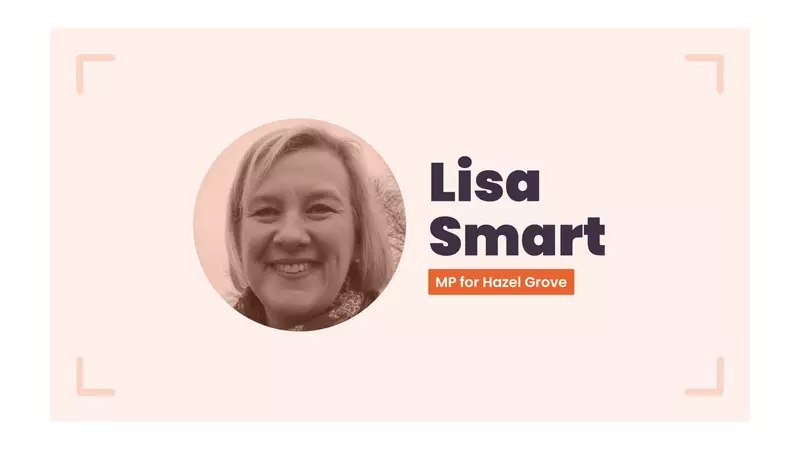
Liberal Democrat MP Lisa Smart has issued a powerful call for urgent action to protect children from the dangers of social media, proposing a radical new system of film-style age ratings for online platforms.
A Public Health Crisis in the Digital Age
In a significant intervention, the Stockport MP described the current state of social media for young people as approaching a public health crisis, with profound impacts spreading across society. While acknowledging her personal reluctance to engage extensively with social media platforms, Smart emphasised that this stance reinforces her commitment to personal choice – a principle she believes must be carefully balanced against potential harm to others, particularly those still learning about digital impacts.
Proposing Legislative Safeguards
The Liberal Democrats have already taken concrete parliamentary action, having voted in favour of legislation to raise the digital age of data consent to 16. This measure aims to prevent technology companies from profiteering from children's attention. The party has also supported banning mobile phones in schools, recognising technology's educational role while preventing classroom distractions.

Smart has now tabled a crucial amendment to the Children's Wellbeing and Schools Bill, calling for a ban on harmful social media access for under-16s. Her proposal advocates for:
- Film-style age ratings of up to 18 for the most harmful platforms
- A default rating of 16 for social media applications
- A future-proof, harm-based approach with regulatory enforcement
Learning from Established Systems
The proposed model would adapt the film and video classification system established in the 1980s, creating what Smart describes as a pioneering age-appropriate standard for the online world. This approach has garnered support from leading children's charities including the NSPCC, who recognise the need for parity between offline and online protections.
Platforms that spread harmful content or rely on addictive algorithms should not be accessible to children, Smart argues. However, her model demonstrates nuance by allowing continued access to educational resources like Wikipedia and crucial support services such as Childline forums – resources that might be restricted under blanket bans.
A Critical Moment for Online Safety
Smart describes this as a pivotal moment to establish new online safety standards that genuinely hold technology giants accountable. She warns against repeating mistakes seen in Australia, where new social media platforms have emerged in what she terms a game of whack-a-mole, evading regulatory measures.
With legislation still under parliamentary debate, and the House of Lords recently voting to keep all options open through a broader Conservative amendment, Smart acknowledges the complexity of finding consensus. While I think there is a better model than the one the Conservatives have committed to, what is most vital is ensuring that something is done, she states emphatically. Our children deserve that protection.
Addressing Future Technological Challenges
Smart positions this initiative as merely the beginning of comprehensive digital protection, highlighting its potential to tackle harmful gaming applications and address emerging threats from technologies like artificial intelligence. She condemns technology companies for treating children as data to be mined rather than young people to be protected, criticising the design of addictive algorithms that promote endless scrolling at the expense of mental health, physical wellbeing, sleep quality, and concentration.
The MP concludes with a firm commitment to holding the government accountable for protecting children online, signalling this as a continuing priority in her parliamentary work. As digital landscapes evolve, Smart's proposals represent a significant attempt to create durable safeguards for the most vulnerable internet users.