What does the future look like for people in the West Midlands? I believe voters deserve better.
By Dr Steve McCabe
Published 6th May 2026, 08:08 BST

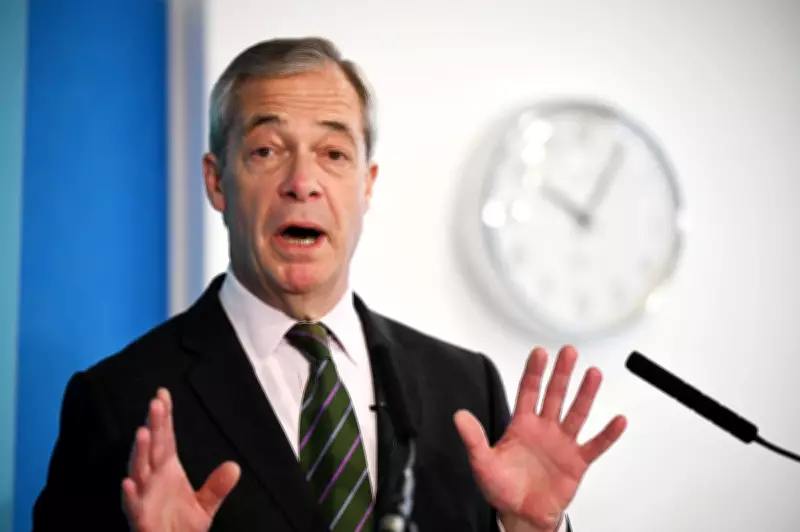
On a recent trip to the Black Country, Reform UK leader Nigel Farage stated his expectation that his party will 'win big'. As is characteristic of Farage's combative approach to making appearances, there was the usual array of promises that if his party takes control of councils in the Black Country, local people will feel the benefit of lower council tax, improved employment prospects, and a better environment as a consequence of a crackdown on anti-social behaviour.
As someone who has spent the last decade monitoring the political mood and, most especially, the way in which political parties are being shaped by events, there can be little argument in terms of Farage's influence and longevity. Farage, who seems to exult in being what is referred to as a 'colourful politician', enjoys a reputation for ruffling feathers and, after leaving Dulwich College, a fee-paying private school in south London where he was accused of holding distasteful and offensive and racist views as well as being a bully, went on to become a trader in the City of London.
Having joined the Conservative Party in 1978 aged 14, Farage resigned as a member in 1992 because he disagreed with the then Prime Minister John Major leading his government in signing the Treaty on European Union at Maastricht. 'Maastricht', as the treaty is frequently called and which took effect on November 1st, 1993, was vital in the European Economic Community, which the UK had joined in January 1973, transitioning to becoming a more federalist organisation similar to the United States of America in that it would henceforth be the European Union (EU).
Advocates claimed that being part of a closer politically unified body, the EU, would strengthen member states' influence through common arrangements for economic policy as well as agreed foreign/security policies and justice/home affairs, the so-called 'three pillars'. Detractors, mainly within the Conservative Party, who became known as 'Eurosceptics', were vehemently opposed to this change and regarded it as a selling out of the sovereignty of the UK government in Westminster and, as such, a diminution of the rights of British citizens to determine their own laws and future.
Eurosceptics, who became a source of irritation to John Major until he left office when Labour won the May 1997 general election, proclaimed they would do everything they could to extract the UK from being a member of the EU. And Nigel Farage can claim, with the assistance of others – particularly those with deep pockets to fund this objective – to have been instrumental in achieving the vote on continued membership of the EU in June 2016 through his leadership of UKIP (United Kingdom Independence Party), which he formed in 1994.
'Brexit', the hybrid of 'British' and 'exit', which, following the narrow vote in favour of leaving the EU, undoubtedly ranks as arguably the most significant political development in the UK since the end of the Second World War. What Farage and those campaigning to leave the EU did was the consequence of which was always described in a somewhat vague manner by stressing that by 'taking back control', the UK would have greater power to determine its economic and social future by having trade arrangements on its terms rather than those of the EU. Doing this, it was argued, would result in greater overall prosperity for the country by restoring the fortunes of areas which had experienced decline following deindustrialisation in the early 1980s under Margaret Thatcher.

Thatcher, who coincidentally gave her passionate support to financial deregulation in the city of London, oversaw a seminal change in the relative economic prosperity of regions, which, overall, concentrated wealth into the Southeast in general and capital in particular. 'Left behind communities', those in which traditional industries such as 'metal bashing', which is synonymous with the Black Country, were left to fend for themselves in whatever way they could. As well-paid jobs in factories disappeared, those now out of work faced vastly reduced choices. Employment on offer in the Black Country, scant as it was, often consisted of less well-paid jobs in retailing and distribution, the latter of which has increased in direct correlation to our proclivity to shop online.
The Black Country, which has a long and proud tradition of ingenuity and creativity in the use of resources and skilled labour in manufacturing dating back to the Industrial Revolution, has, in the last forty or so years, experienced all of the unfortunate byproducts of decline: a sense of hopelessness and pessimism and lack of opportunity for existing and, more damningly, future generations. Allied to the spike in unemployment, which goes hand in hand with reduced business confidence, is the fact that investment in deprived areas has the consequential impact of a marked reduction in social and environmental indices, including health, substance abuse, life expectancy, housing standards, crime and educational attainment.
Very significantly, as those campaigning to leave the EU ten years ago were able to successfully tap into, those finding themselves and their families experiencing disadvantage and deprivation are wont to blame others for their plight. Though frequently without any evidence, such blame was directed against politicians, most particularly members of Parliament, seen to operate, as the parlance goes, 'in the interests of the metropolitan elite'. However, what proved insidious was the growing belief that membership of the EU, with its statutory requirement for free movement of goods and people, had resulted in a wave of immigrants who, in their willingness to seek employment, were undermining the prospects of indigenous people.
Farge has repeatedly rejected the accusation that the policies of both UKIP and, more latterly, Reform UK are racist. However, there is little doubt that Reform UK, as a right-of-centre populist party campaigning for reduced immigration by those arriving on 'small boats', chimes with those living in deprived areas who, based on whatever the evidence they believe to be true – often internet and social media – is that Britain is being overrun by illegal immigrants.
As Reform UK states unequivocally on its website: 'Illegal immigration is out of control because politicians choose not to enforce the law and let foreign courts rob British citizens of a border. A Reform UK government will stop the boats by immediately leaving the ECHR, restoring full control of our borders, intercepting and detaining all illegal arrivals, and deporting them. There will be no loopholes, no delays, and no endless appeals. We will also end Britain being treated as a global welfare system. No more free housing. No more benefits. No more taxpayer-funded incentives for illegal migration. An end to NGOs facilitating illegal migration. Detention and deportation will be the only outcome.'
The website explains that it will deport 'all illegal immigrants' by implementing a five-year emergency programme 'to identify, detain, and deport illegal migrants in the UK' and passing legislation to leave the European Convention on Human Rights as well as repealing the Human Rights Act. Additionally, Reform UK promises it will pass the Illegal Migration (Mass Deportation) Bill to 'ensure that anyone who enters the country illegally will be ineligible for asylum'.
These, of course, are national policies and will only be implemented should Reform UK win the next general election, likely to take place in three years in 2029. However, there is little argument that those who are standing at the local elections believe in these policies and are happy to take the votes of disillusioned former Labour voters who believe that high immigration is a major issue and that their concerns have been ignored by successive governments and that by voting for Reform UK in the forthcoming local elections they will send a clear message of the urgency for radical change.
Though the elections do not take place until 7th May, the best we have are opinion polls. For the four parts of the Black Country, Dudley, Sandwell, Walsall, and Wolverhampton, these polls paint an intriguing picture. So it seems, and though Reform UK appears likely to win a number of seats across the Black Country, the councils in which most significant change will occur are Walsall, where it will enjoy overall control, and Dudley, where it will come second to the Conservatives and may hope to strike a deal to become part of a coalition. This certainly would indicate that Farage, on his visit to the Black Country last week, has good reason to be chipper.
However, as Keir Starmer is discovering at tremendous cost to his reputation, promising change is the easy part; actually delivering such that potential voters are swayed to want to vote for your party in the future is an entirely different matter. The performance of Reform UK-led councils elsewhere in the Midlands – they control Nottinghamshire, Derbyshire and Worcestershire, and in Leicestershire, they did not achieve a majority but, as the largest single party, govern as a minority administration – is a mixed bag. Farage says that it is too early to judge how Reform UK are changing the face of local government.
What seems clear is that the claim by Reform UK that they intend to save millions by renegotiating contracts and rationalisation of services and reduction in staff has not always been successful; in the case of Worcestershire, there has been an 8.99% increase in council tax. Crucially, residents in the four councils are divided as to whether there have been improvements in local services. And this is what is critical.
Remember, ten years ago, persuading a majority of voters that we should leave the EU Leave some 17,410,742 (51.9% of the turnout), Farage's greatest political achievement, has not produced the benefits promised; quite the contrary. Should Reform UK win big in the Black Country, can it make the lives of local residents better such that there is increased provision of vital services and, more vitally, drive up investment in infrastructure to underpin business creation and job opportunities? Ultimately, if people believe the prospects for them and their children are improving, that is all that really counts. And, given the issues communities have been confronted with in the last four decades, despite all of the promises made by a succession of politicians from the main parties, who blames them for wanting more. I sincerely hope they will not be disappointed.
Dr Steve McCabe is Professor and Pro Vice Chancellor, DoctorateHub. Previously, having worked for Birmingham City Council, he spent the last 35 years as an academic at Birmingham City University teaching and researching economics, management and business. Additionally, he has written extensively for edited texts examining economics and politics. He regularly writes and comments regularly in the national and international media on politics and the economy and has published texts on quality management, benchmarking, 'Brexit' and its economic and social impact, the green economy and manufacturing, house prices and India's progress since independence.