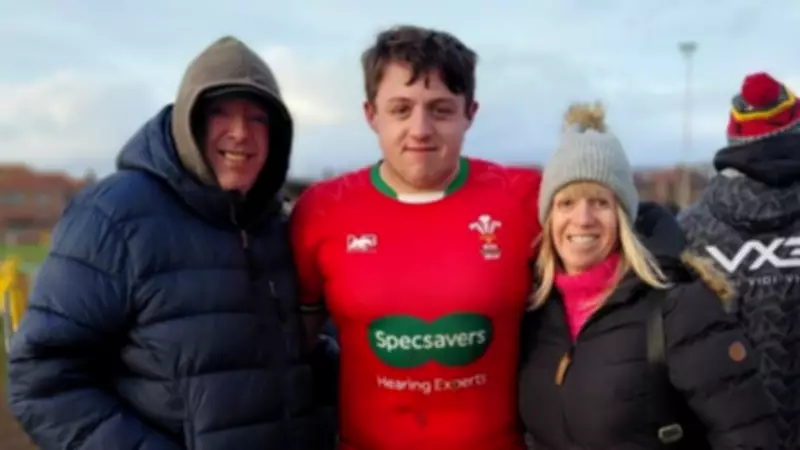
An exceptionally talented young rugby player from North Wales is setting his sights on becoming a powerful role model for deaf children across the nation. Rhys Owens, an 18-year-old university student, has earned a coveted place in the Wales squad for the upcoming Deaf Rugby World Cup, aiming to prove that athletes with hearing impairments possess the same capabilities as their hearing counterparts.
A Lifelong Passion for Rugby
Rhys's journey in rugby began at a remarkably young age, deeply influenced by his family's ardent support for the sport. He attended his first Wales international match in Cardiff when he was just two years old, sparking a lifelong passion. "My family's love for rugby was definitely one factor in my choice," Rhys explained. "But rugby being an all-inclusive sport where anyone is welcomed was the other major factor that drew me to it." He joined Wrexham Rugby Club at the age of eight, where teammates and coaches made concerted efforts to speak loudly and clearly, ensuring he could fully participate in training and matches.
Overcoming Hearing Challenges
At seven years old, Rhys was diagnosed with glue ear, a condition where fluid accumulates in the middle ear, leading to significant hearing loss. Despite undergoing surgery to insert grommets—small tubes designed to drain the fluid—his hearing did not fully recover. He has relied on hearing aids ever since, using spoken language rather than sign language to communicate. Navigating mainstream education presented considerable challenges, particularly in noisy classroom environments where following lessons could be difficult. However, rugby emerged as his sanctuary and a source of immense confidence.

Securing a Spot on the National Team
In 2024, a coach informed Rhys about the Wales Deaf Rugby Union (WRU Deaf), an organisation run by dedicated volunteers who provide crucial support with training, finances, physiotherapy, and coaching. He promptly applied and, after demonstrating his skill and dedication, was selected for the national squad in November 2025. "It felt great to be picked, and I felt really honoured to represent my country and my club," Rhys remarked. His selection is a testament to his perseverance, having continued to hone his skills despite taking time off for two operations related to a perforated eardrum. He now plays in the senior team at Wrexham, showcasing his development as a formidable player.
Adaptations in Deaf Rugby
Deaf rugby follows the standard rules of World Rugby Union but incorporates several key adaptations to ensure inclusivity and fair play. These modifications include visual signals from referees, the use of flag-carrying officials, and the presence of British Sign Language interpreters on the touchline. To qualify for official international fixtures, players must have a minimum average hearing loss of 50 decibels across both ears. These adaptations allow athletes like Rhys to compete at the highest level while highlighting the sport's commitment to accessibility.
Aspiring to Inspire the Next Generation
Rhys is keenly aware of the inspirational role he can play for young deaf individuals interested in sports. "I hope any young athletes out there who are deaf do try and research whether their sports have deaf national teams, because it has done me nothing but good since signing up," he urged. "Rugby improves so many life skills and will make you feel so much more confident in your playing ability despite your hearing aid. We are capable of doing anything other athletes can do." His message is one of empowerment, encouraging others to pursue their athletic dreams without letting hearing loss be a barrier.
Fundraising for the World Cup Dream
The Deaf Rugby World Cup 2026 is scheduled to take place in Tokyo, Japan, during October and November. To help cover the substantial travel and participation costs, Rhys has established a GoFundMe page with a target of raising £2,500. "It would mean the world to me if I could play for Wales in Japan," he shared. "As a young lad, I would dream of playing for Wales, and now that I have this opportunity, I would be over the moon and would not let anyone down." This fundraising effort underscores the community support needed for athletes in disability sports to compete on the global stage.

Rhys Owens's story is a powerful narrative of resilience, passion, and the transformative power of sport. As he prepares to represent Wales in Tokyo, he stands as a beacon of hope and a testament to the fact that with determination and the right support, deaf athletes can achieve extraordinary success and inspire countless others to follow in their footsteps.