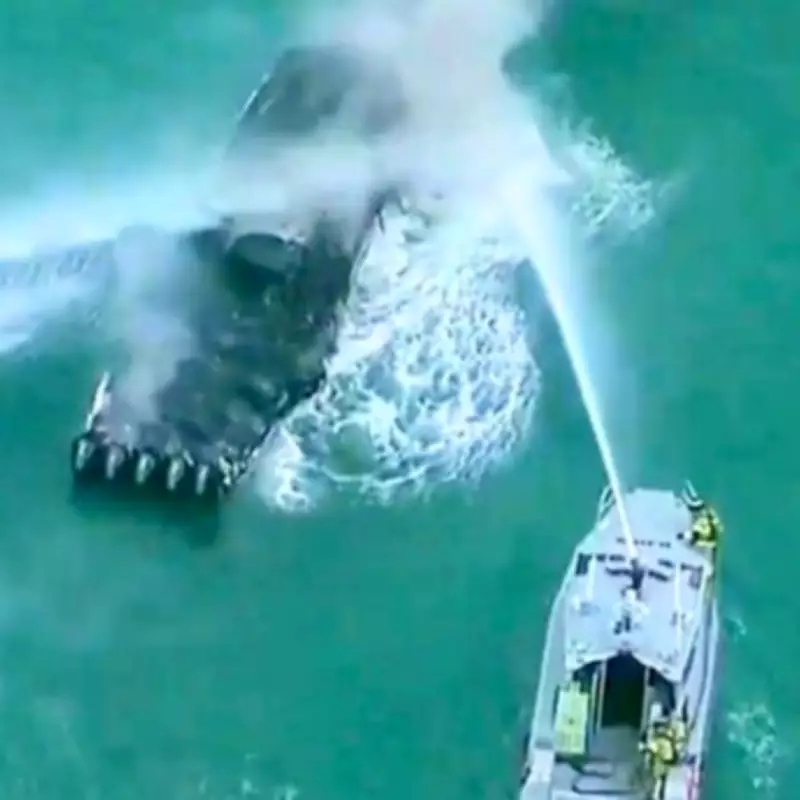
A terrifying boat explosion at a picturesque tourist destination has left 11 people hospitalised, with one witness recalling how the blast hurled several victims into the sea before the charter vessel was consumed by flames.
Mass Casualty Incident Declared
US authorities have since declared a level two mass casualty incident, after emergency services deployed more than two dozen rescue units to waters off the coast of Miami to assist those caught up in the devastating explosion.
The charter vessel was navigating the waters of Biscayne Bay, near the Sunshine State's renowned Haulover Sandbar, when the blast occurred.

According to the Miami Herald, which had obtained audio recordings of dispatch communications between base and first responders at the scene, there was considerable confusion when rescue teams arrived.
The dispatcher attempted to establish how many people were injured, with the firefighter responding: "They keep coming.... we just aren't sure right now."
The audio confirmed that numerous people sustained burns. Some were flung into the water by the force of the explosion and were subsequently rescued by fire-crew lifeboats.
The casualties were then swiftly transported to nearby fuel docks before being taken to local emergency trauma centres, with some airlifted to hospital. Some were taken to Jackson Memorial Hospital's Ryder Trauma Centre and Burn Centre, the paper said.
Victims Hurled into the Water
The Miami Herald identified the boat as a Press Cruiser 400 Express, a 40-foot cabin cruiser called Nauti Nabors, from Texas. South Florida boat captain Patrick Lee watched the horrifying incident unfold before him. He was ferrying passengers on his tiki boat to a larger vessel moored in waters near the Haulover Sandbar when the explosion went off close by.
"We saw three people fly out of the boat," he said.
Lee described how the boat was engulfed in flames within minutes, adding that a number of people were carried away on stretchers by paramedics.
"I just saw a lot of them with burns all over them, and I said that it's a hot fire," Lee said. "It is quick, but it's high octane gasoline, and so a lot of them got burnt, and it was an explosion."
The boat captain, with more than 50 years of experience, suggested to local media that the blast was most likely caused by exhaust fans that had not been switched on, allowing fuel fumes to become trapped aboard. When the boat's ignition was turned over, it ignited the explosion, he speculated, basing his theory on what he had personally witnessed and his extensive decades of boating experience.
"[The captain's] people got on board, he turned the key, didn't open the hatches, and didn't turn on the blowers - he blew people out of the boat," he said.
He added: "That's the worst thing, [it was totally] preventable. I find most tragedies are from a lack of education. Many people out here shouldn't be operating boats."
A passenger aboard the vessel during the explosion, known only as Leo, also told the Miami Herald the blast was caused by a gas leak. Leo, who declined to give his surname and escaped uninjured, added: "It was the worst experience of my life."
According to dispatch audio logs, fire crews indicated the explosion potentially originated from the boat's fuel tank.
Safety Reminder from Officials
Fire and rescue officials have since released a public statement, with the boat explosion serving as a stark reminder to people to "prioritise [their] safety while out on the water".
In their statement, the Miami fire service said: "Make sure your vessel is equipped with a working fire extinguisher and all required safety equipment. Before departure, perform a thorough safety check to ensure your boat is in good working condition and free of potential hazards.
"Taking a few extra precautions can help prevent emergencies and keep everyone safe."
The explosion and resulting boat fire is now the subject of an official investigation by the authorities, who are yet to establish the cause. Remarkably, the boat's captain walked away from the terrifying incident completely unscathed, escaping injury from both the initial blast and the ensuing fire.