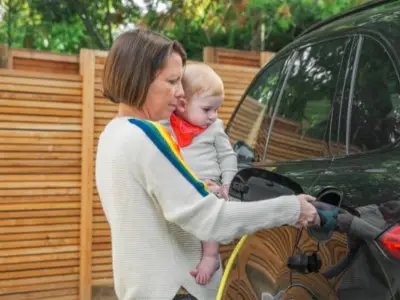
The Labour government is actively considering a significant policy shift aimed at reducing the financial burden on electric vehicle (EV) drivers who lack access to a private driveway. This move directly targets the higher costs faced by those reliant on public charging infrastructure, a disparity critics have labelled a "pavement tax."
Targeting Network Charges and VAT
According to reports, ministers are focused on cutting the so-called network charges applied at public charging points. These are the fees paid by charge point operators to energy network companies, which are then passed on to consumers. Simultaneously, the Treasury is examining a potential reduction to the 20% VAT rate currently levied on electricity from chargers located at service stations, supermarkets, and on residential streets.
A Whitehall source emphasised the government's rationale, stating the key to convincing the public to switch to EVs is demonstrating that the process is both easy and affordable. They indicated there are tangible savings to be unlocked for a large segment of the population through these reviews.

The Rising Cost Pressure on Public Charging
The urgency of the review is underscored by stark examples from the industry. One executive told the Telegraph that at a specific site, annual costs had surged from under £100 to nearly £40,000 due to recent changes in how standing charges are calculated. These are fixed daily fees that cover the cost of maintaining the connection to the electricity grid, regardless of usage.
An individual involved in the discussions revealed growing internal concern that the planned pay-per-mile road levy—set at 3p per mile for electric cars from 2028—could severely dampen EV demand. This measure is estimated to add approximately £255 per year to the running costs of the average EV driver.
They further highlighted the disproportionate impact of standing charges, noting, “We’re now at the point where standing charges make up more than half of the cost drivers are paying for electricity. Cutting them would bring down prices overnight.”
Government's Broader EV Strategy
The review into public charging costs was formally announced by Chancellor Rachel Reeves in the Budget. The government stated it would assess the impact of energy prices and other cost factors to find options for lowering expenses for consumers.
In a statement, a Government spokesman outlined the wider support for the EV transition, including the plug-in car grant saving drivers up to £3,750 on a new vehicle, with almost 50,000 people having already benefited. They also pointed to over £7.5 billion of investment in the UK's electric vehicle sector.
This potential policy change represents a direct attempt to level the playing field for the thousands of households, particularly in urban areas, who cannot install a home charger, ensuring the shift to electric transport is equitable and economically viable for all.