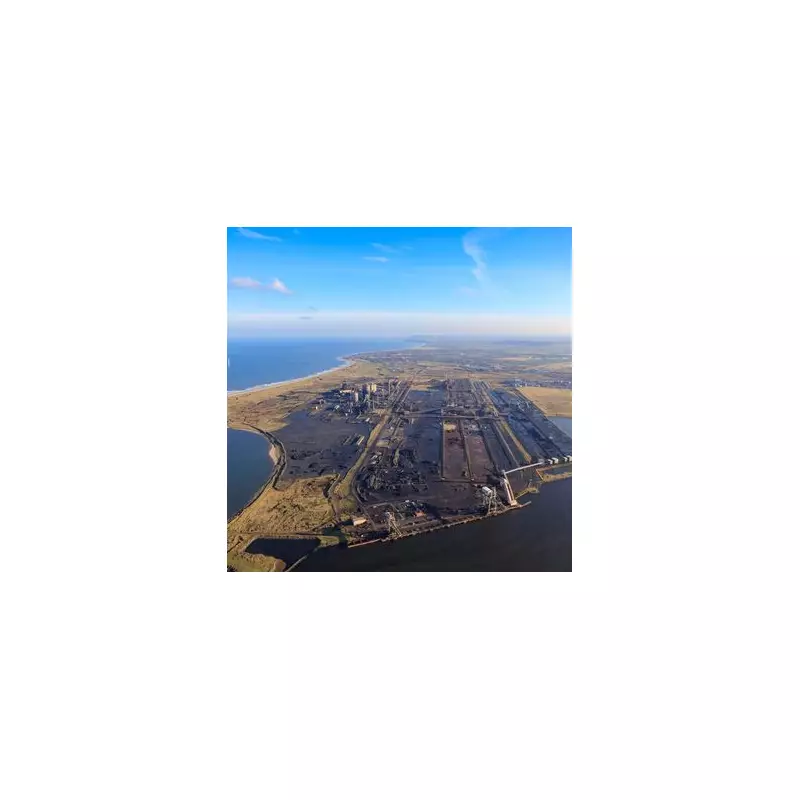
In a significant shift for the region's economic future, energy titan BP has formally withdrawn from a major hydrogen production scheme on Teesside. The decision paves the way for a large-scale data centre to be built on the same contested land at the vast Teesworks site near Redcar.
Clash of National Priorities on Limited Land
The site had become a focal point for two competing national interests: the push for clean energy production and the drive to support the UK's burgeoning AI and technology sector. BP confirmed it has notified the Government's Department for Energy Security and Net Zero of its decision to abandon the H2Teesside hydrogen development.
A spokesman for the company pointed to "material changes in circumstances" as the reason, specifically highlighting that planning permission was granted in August 2024 for a data centre on the identical plot. Correspondence from the project stated the two proposals were fundamentally "incompatible on the same piece of land."

Data Centre Plans Advance as Hydrogen Project Stalls
The data centre application was submitted by Teesworks Ltd, a joint venture between the public-sector South Tees Development Corporation and private developers. While internet giant Google has been linked to the project, the company has declined to comment on the speculation.
BP had previously championed the hydrogen facility's potential, stating it could play a "critical role in decarbonising industry on Teesside" and help kickstart the UK's low-carbon hydrogen economy. The project was also touted to support hundreds of local jobs, though precise figures were never disclosed.
Despite this setback, BP emphasised its continued commitment to other Teesside ventures, including the multi-billion pound Net Zero Teesside Power and Northern Endurance Partnership carbon capture and storage initiatives.
Local Leadership Backs Tech-Focused Future
Tees Valley Mayor Ben Houchen welcomed BP's pragmatic decision, framing it as an opportunity for transformative investment. He stated the move clears the way for what could be "the biggest private investment Teesside has ever seen."
Lord Houchen argued that a cutting-edge data centre would generate more long-term, high-quality jobs and deliver greater "future-proof" growth than the alternative. He highlighted the region's limited land and high investor interest, stating the responsibility was to secure the maximum benefit for local residents.
While the area was not selected as the Government's first official AI Growth Zone—an honour that went to a site near Newcastle—it is understood that ministers still support establishing a zone on Teesside in the future.
"From ICI to AI, Teesside powered the first Industrial Revolution, and now we've got the green light to lead the next one," concluded Mayor Houchen, signalling a bold new chapter for the region's industrial strategy.