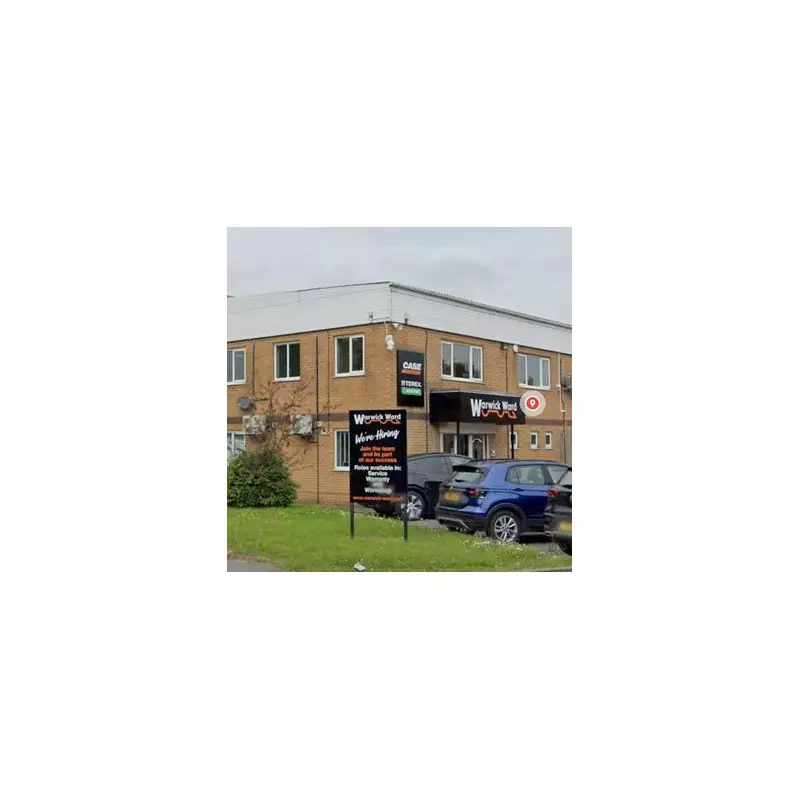
One of the UK's leading suppliers of heavy machinery for construction and waste recycling has ceased trading, resulting in the loss of almost all its jobs. Warwick Ward, a business with a history stretching back over five decades, has appointed administrators, marking a dramatic fall from grace.
A National Supplier Brought Down by Economic Headwinds
Headquartered in Barnsley and founded in 1970, Warwick Ward was recognised as a major national stockist. The company operated depots across Yorkshire, Worcestershire, Bromsgrove, and Essex, serving a vast network of clients in infrastructure sectors. However, joint administrators were called in earlier this month, citing unsustainable pressure from "wider economic headwinds" affecting its core markets.
The immediate consequence has been devastating for its workforce. Administrators confirmed that nearly all of the company's 89 employees have been made redundant. James Lumb, a joint administrator, stated that the "immediate priority" is supporting the staff who have lost their jobs across the country.

The Failed Transition to Employee Ownership
The company's downfall followed a significant ownership change in June 2023. The original owners sold the business to an Employee Ownership Trust (EOT), a move designed to secure long-term benefits for the staff. Unfortunately, the transition proved fatal.
The debt taken on during the buyout became a crippling burden. Financial performance deteriorated sharply after the shift. The firm reported a pre-tax loss of £1.3 million and an 11% drop in sales revenue under employee ownership. This starkly contrasted with its final year under previous management, which saw a healthy profit and stronger sales.
Rescue Efforts Fall Short Amid Sector Challenges
Before the administration, the company's leadership reportedly explored multiple avenues to survive. Options including refinancing, seeking new investment, or finding a buyer were all pursued. However, these rescue attempts were unsuccessful in the face of difficult trading conditions that ultimately strangled the company's cashflow.
The administrators are now focused on managing the company's remaining assets. The collapse of such a significant player is expected to send ripples through the UK's construction and waste recycling industries, leaving many businesses without a key supplier of essential earthmoving equipment.
The story of Warwick Ward serves as a sobering case study of how broader economic pressures, combined with a high-stakes ownership transition, can lead to the rapid unravelling of a long-established business.