North West Business Leaders Express Caution Over Spring Statement Amid Global Uncertainty
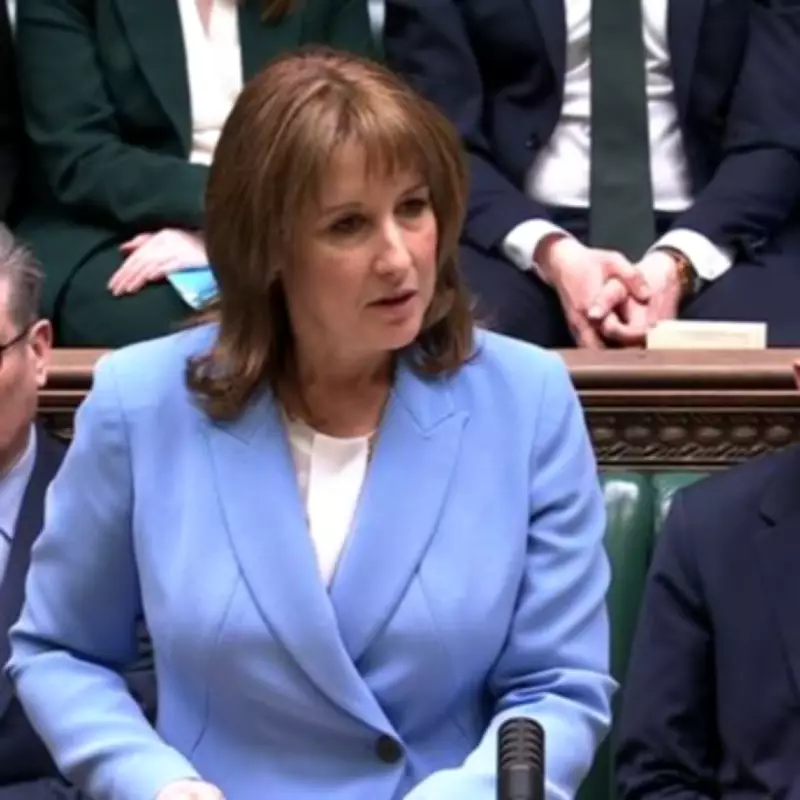
North West business leaders have issued warnings that the ongoing Middle East crisis continues to cast uncertainty over the economic landscape, despite Chancellor Rachel Reeves' confident assertions during her spring statement. The Chancellor addressed the House of Commons, acknowledging weaker economic growth and higher unemployment projections than previously anticipated, yet insisted the Labour government possesses the "right plan" and urged the nation to "stay the course."
Chamber Criticizes Lack of Concrete Measures
Subrahmaniam Krishnan-Harihara, director of business policy and research at Greater Manchester Chamber of Commerce, highlighted significant concerns. "In a brisk and politically charged 20-minute speech," he noted, "Chancellor Rachel Reeves claimed recent economic data vindicated her Autumn Budget. While she acknowledged the Middle East situation and potential economic disruption, there was no concrete measure to navigate the impact of a possible oil price shock or other turmoil."
The Chancellor referenced the latest Office for Budget Responsibility (OBR) forecast, which predicts falling inflation this year leading to softer interest rates and reduced borrowing. Reeves pointed to increased consumer spending as evidence of rising living standards and economic resilience, attributing these gains to Labour's stability, investment, and reform agenda.

Economic Forecasts and Public Spending Pledges
Key aspects of the speech included public sector spending commitments such as freezing rail fares, extending fuel duty cuts, increasing defence spending, and scrapping the two-child benefit limit. However, Krishnan-Harihara identified a critical shortfall: "The speech's critical shortfall lies in its lack of fresh stimulus. Growth for 2026 was downgraded to 1.1% while unemployment is set to peak later this year before falling to 4.1% by 2030."
GDP per capita, after recent declines, is forecast to rise 5.6% over the parliament. Near-term growth has been downgraded, with GDP growth expected at 1.6% in 2027-28 and 1.5% in 2029-30. Borrowing is projected to fall by 2029/30, providing additional fiscal headroom and debt interest savings.
Business Reactions and Regional Perspectives
Robert White, chief executive officer at North West law firm Brabners, offered a more optimistic view: "Business confidence is building across the North and today's Spring Forecast helped to reinforce that momentum. The Chancellor kept her promise of no major policy announcements, which is welcome after November's Budget and the turbulence that followed."
White emphasized the importance of consistency and discipline in fiscal messaging, stating that stability gives businesses confidence to invest. He highlighted the upcoming growth speech as an opportunity to articulate the government's long-term economic vision and empower regional leaders with genuine authority and sustainable funding.
Academic Analysis and Geopolitical Risks
Dr Maria Rana, lecturer in economics and finance at the University of Salford, provided academic insight: "As tensions escalate in the Middle East and oil prices rise, Rachel Reeves told Parliament that Labour's economic strategy remains the right course for the country." She noted that households are expected to be approximately £1,000 better off annually under government plans.
The OBR forecasts economic growth of 1.1% in 2026, down from 1.4% projected in November. While medium-term outlook has improved modestly, the near-term picture remains subdued. Unemployment is expected to peak at 5.3% this year before gradually falling to 4.1% by 2030, with inflation projected to return to the 2% target this year.
However, Dr Rana cautioned: "These forecasts do not account for the potential impact of higher energy prices driven by the conflict in the Middle East. If pressures continue to intensify, the outlook could quickly deteriorate, affecting not only the UK but the global economy."

Industry-Specific Concerns
Daniel Burton, founder & CEO of Manchester-based Wondrwall and manufacturer of Battery PowrPlan, criticized the statement's approach to energy markets: "Despite the Ofgem Price Cap decreasing by 7%, UK households will remain vulnerable due to ongoing geopolitical conflicts. The Spring Budget offers no solutions for the currently volatile energy market."
Burton advocated for future-proofing homes with technology to protect against unpredictable global markets and affordability challenges.
Roger Philips, head of tax at North West accountants PM+M, described the statement as a "relative non-event" that landed against a more uncertain global backdrop than anticipated. He noted a self-congratulatory tone regarding falling inflation and borrowing costs, despite government policy having no direct impact on these factors.
Construction Sector Challenges
Sean Keyes, CEO at civil engineering firm Sutcliffe, called for more support for SMEs to address the skills crisis in construction. "Chancellor Reeves has spoken repeatedly about the need to kickstart economic growth and deliver the homes this country desperately needs," he said. "We agree with her on both counts."
Keyes welcomed the government's target to build 1.5 million new homes but warned that planning departments are under strain and the workforce is shrinking. "Growth requires builders. And right now, we do not have enough of them," he stated.
Sutcliffe has committed to training 40 new engineers over the next decade through apprenticeships and graduate programs. However, Keyes emphasized that individual firms cannot solve systemic problems alone, calling for meaningful government investment in skills infrastructure and targeted funding for SMEs to help move young people into employment and training.
Overall, while the spring statement reinforced Labour's narrative of progress, business leaders across the North West remain cautious, highlighting vulnerabilities to geopolitical shocks and structural weaknesses that could test the UK's economic resilience in the coming months.