Prime Minister Sir Keir Starmer has declared the development of a small modular nuclear reactor and artificial intelligence growth zone in North Wales as "probably the biggest announcement for a generation" that will bring thousands of jobs to the region for decades to come.
During a visit to Anglesey on Thursday, the Labour leader revealed that more than 6,500 jobs would be created through the dual projects, with the UK's first small modular reactor (SMR) nuclear power station set for the Wylfa site and a new AI growth zone established in the region.
Nuclear and AI Investment Details
The groundbreaking nuclear project will see Great British Energy - Nuclear, a publicly owned entity, build the country's first SMR at Wylfa in North Wales, backed by £2.5 billion in government investment. The reactors will be designed by Rolls-Royce SMR, subject to final contract agreements.

Sir Keir stated that the nuclear site alone would create 3,000 jobs, while the complementary AI growth zone would generate an additional 3,500 positions. He described the data centre as "absolutely amazing" and predicted it would act as a "magnet to bring in even more jobs" through attracting additional businesses to the area.
Addressing International Criticism
The announcement prompted strong criticism from US ambassador to the UK Warren Stephens, who expressed that Washington was "extremely disappointed" by the decision. The American diplomat had pushed for a larger reactor at Wylfa to be built by US firm Westinghouse, which had reportedly presented plans for a new gigawatt station at the site.
Energy Secretary Ed Miliband firmly defended the choice, stating he made "no apologies" for selecting British company Rolls-Royce to design the reactor. "Our job is to stand up for the national interest," Mr Miliband told Times Radio, while acknowledging that the alternative site considered at Oldbury in Gloucestershire could accommodate US companies interested in future UK nuclear projects.
A Downing Street spokesman emphasized that the Wylfa decision "doesn't close the door to a larger plant elsewhere" with US involvement, noting that American partners remain vital to Britain's nuclear future through supply chains, technology, and future sites.
Long-term Economic Impact
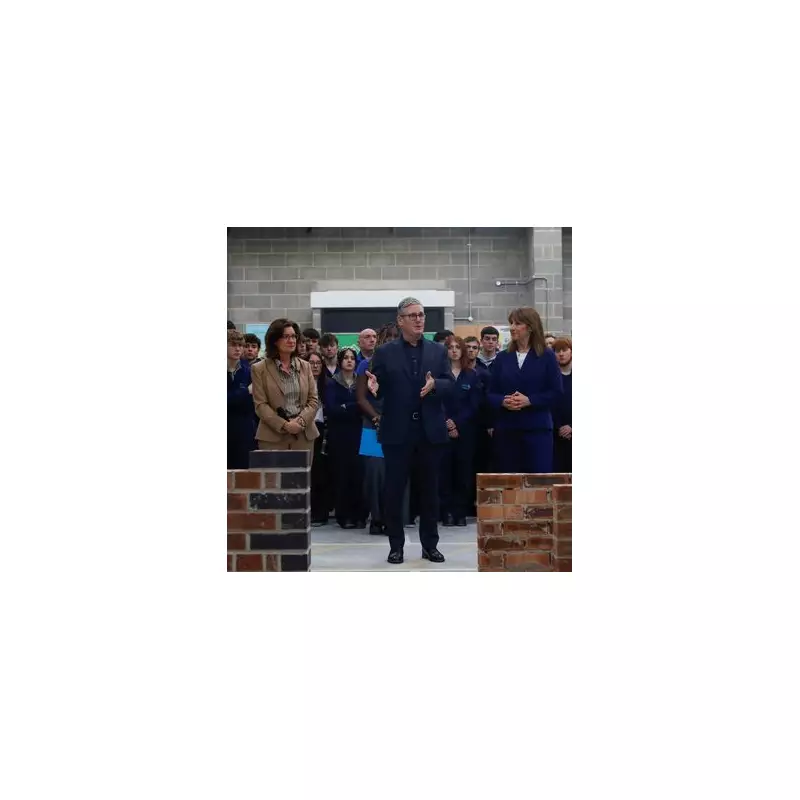
Speaking at Coleg Menai in Anglesey, Sir Keir emphasized the transformative nature of the investment: "Putting that together, 6,500 jobs – I personally think it'll be more than that because I do think these things have a magnet effect. They draw in other businesses."
The Prime Minister highlighted the enduring nature of the employment opportunities, noting that "these are not jobs that are going to last one year or two years or three years... These are jobs that'll be there for decades to come." Work is expected to begin imminently, with jobs ramping up throughout the rest of this year and coming on stream fully next year.
The government also announced that Great British Energy-Nuclear has been tasked with identifying potential sites for another large-scale nuclear power plant, similar to those being built at Hinkley Point in Somerset and Sizewell in Suffolk, with a report due by autumn 2026.
Small modular reactors represent the next generation of nuclear technology – mini nuclear power stations that are smaller and designed to be installed on site as prefabricated modules. The technology promises to be quicker to build than traditional plants like Hinkley Point C, with the UK's first SMRs expected to generate enough electricity to power three million homes.
This major investment in Wylfa marks a significant turnaround for the site, where previous attempts to bring back nuclear power had failed. The Department for Energy Security and Net Zero described the announcement as positioning Wylfa to become a "beacon" of a new nuclear golden age in Britain.