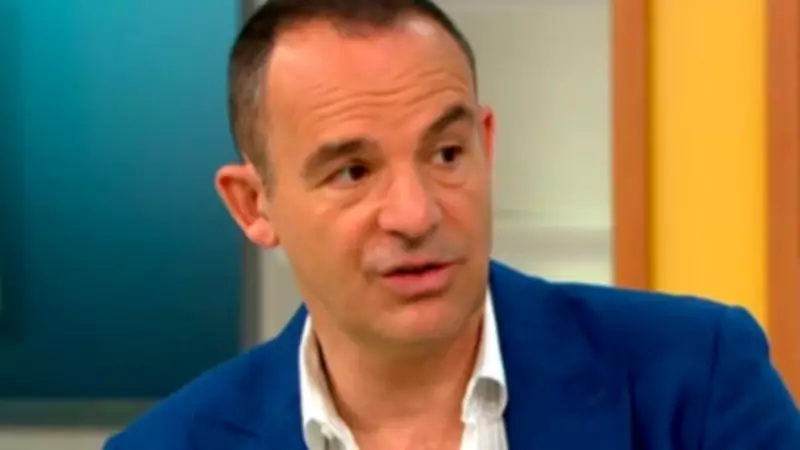
Personal finance guru Martin Lewis has delivered a vital alert to credit card users across the UK, detailing a critical mechanism that can lead to substantial interest charges. The founder of MoneySavingExpert.com emphasised that failing to clear a credit card balance in its entirety, even by a mere penny, can result in interest being applied to the full original amount owed.
The 'Penny Short' Rule Explained
In a recent podcast episode and a social media post titled Credit Card Warning: When 1p Costs as Much as £1,000, Lewis illustrated the point with a stark example. "Imagine you've spent £1,000 on your credit card," he stated. "If you then pay off the full £1,000, you incur no interest for that month. However, if you pay only £999.99—leaving just one penny unpaid—you don't pay interest on that single penny. You are charged interest on the entire £1,000 balance."
This underpins his long-standing catchphrase: 'PAY OFF YOUR CREDIT CARD IN FULL!' Lewis stressed that the 'IN FULL' part is absolutely essential. "It neuters the credit card's ability to charge you interest. Miss even a penny, and it can still charge you a whack," he warned, noting this principle applies whether seeking cashback rewards or making purchases abroad.

Strategic Debt Management: The Balance Transfer Tool
Lewis, who has previously outlined his 'two rules' for credit card debt, advocates for the intelligent use of balance transfers as a primary strategy. Appearing on ITV's This Morning, he explained that a balance transfer involves obtaining a new credit card that pays off existing card debts, moving the balance to a new account often offering a 0% interest period.
Key Application Advice
He advised consumers to follow two crucial steps when considering this route:
- Use an eligibility calculator: Before applying for any new card, utilise an eligibility calculator on a comparison website. This checks your likelihood of acceptance without leaving a 'hard search' mark on your credit file, which can impact your credit score.
- Choose the right card: If you have a choice, opt for the card with the lowest one-off fee within a sufficiently long 0% period that matches your repayment plan.
Lewis highlighted current market examples: "The longest card available is from TSB, offering up to 38 months at 0% with a 3.49% one-off fee. For a £1,000 transfer, that's a £35 fee. Alternatively, the longest no-fee card is from Barclaycard, offering up to 14 months at 0% with no fee." He advised that if you can clear the debt within the shorter, no-fee period, that is preferable; otherwise, a longer term may be necessary despite the fee.
Debit Cards vs. Credit Cards: A Surprising Comparison
Challenging the common perception that debit cards are inherently 'better' than credit cards, Lewis pointed out several scenarios where credit cards can be more advantageous, provided they are managed correctly.
- Cost of Debt: An overdrawn current account using a debit card typically incurs interest at around 40% APR. A standard high street credit card's interest rate is often around 25% APR. "If you had to owe on one, you would be better off owing on the credit card," Lewis noted.
- Consumer Protection: Under Section 75 of the Consumer Credit Act, purchases between £100 and £30,000 paid for even partly with a credit card grant the card provider joint liability with the retailer. This offers stronger protection than the chargeback scheme typically available for debit card transactions.
- Spending Rewards: Many credit cards offer cashback or reward points, which can provide tangible benefits on everyday spending.
"For many people, done sensibly—as long as you're paying your credit card off in full every month and you've chosen the right card—it's often a better way to spend than a debit card," Lewis concluded, promising a detailed card-by-card analysis in his forthcoming podcast to guide consumers.