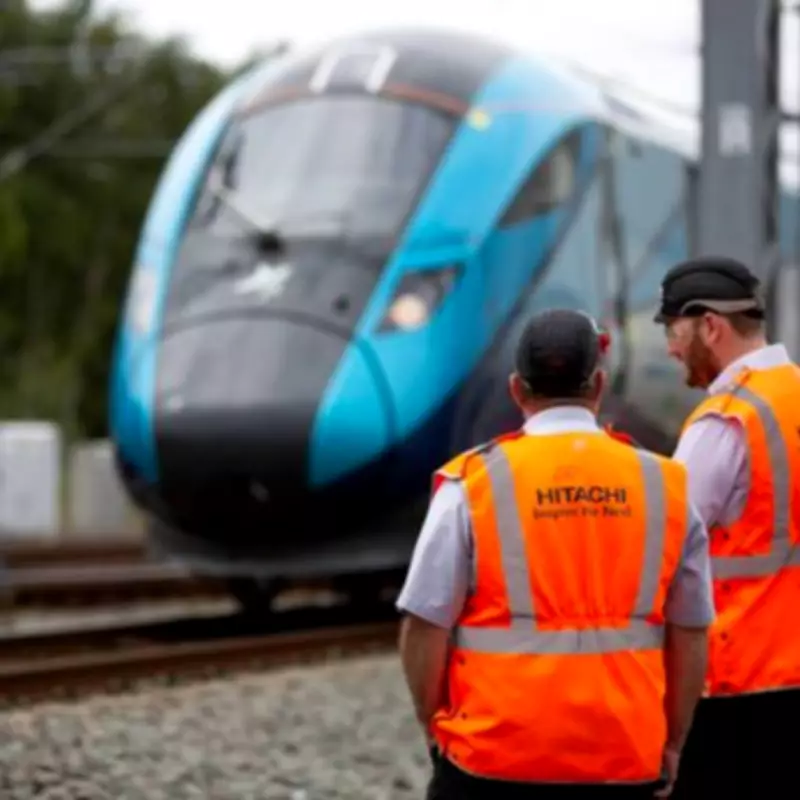
Hitachi Rail, the prominent train manufacturer based at its extensive Newton Aycliffe plant in County Durham, has released its financial accounts for the year ending March 2025, revealing a mixed performance with rising revenues but a shift into operating losses. The company reported revenues climbing from £725.1 million to £748.4 million, driven by increased activity in operations, service, and maintenance sectors. However, this growth was overshadowed by an operating loss of £61.9 million, a stark contrast to the previous year's profit of £5.2 million, primarily due to a significant impairment charge related to a specific product development.
Financial Performance and Strategic Moves
In its latest financial disclosure, Hitachi Rail detailed how higher revenues from long-term construction contracts, which contributed £115.9 million, and services rendering, accounting for £632.5 million, fueled the overall revenue increase. Employee numbers also saw a slight rise, growing from 2,610 to 2,636, indicating ongoing operational expansion. Despite the profit downturn, the company paid an interim dividend of £56.3 million, reflecting its commitment to shareholder returns amidst financial adjustments.
Impairment Charge and Product Development
The key factor behind the profit loss was an £88.5 million impairment charge associated with the AT300 SXR Platform development, a variant of Hitachi Rail's AT300 train series designed for East Midlands Railway. Directors explained in the accounts that changing assumptions about new market opportunities and contracts led to this assessment, comparing the value in use with the carrying value. While future orders for this product remain possible, the charge highlights the challenges in adapting to evolving market demands.

Investment in Future Growth
Amid these financial results, Hitachi Rail emphasised its continued investment strategy to navigate a changing market landscape. The company is focusing on growth opportunities in digital and green mobility, supported by initiatives such as trialling digital infrastructure monitoring solutions on the UK rail network and advancing pioneering battery train technology. This strategic shift is part of a broader effort to enhance sustainability and digitalisation within the rail sector.
Acquisitions and Financial Support
To bolster its strategic goals, Hitachi Rail has made significant acquisitions, including the entire share capital of Centelec UK Limited from Thales SA in May 2024 and agreeing to acquire Omnicom, a digital rail monitoring business from Balfour Beatty, in January 2025. These moves aim to strengthen the company's focus on digitalisation and sustainability transformation. Financially, Hitachi Rail has access to an uncommitted £415 million loan facility from the Hitachi Group Treasury, with total cash resources exceeding forecast needs, backed by a letter of support from its ultimate parent, Hitachi Ltd, until June 2026.
Market Position and Client Base
Hitachi Rail serves a diverse range of clients across the UK rail industry, manufacturing and supplying rolling stock, railway maintenance, and traffic management systems. Notable projects include producing 'British bullet trains' for HS2 Ltd, battery hybrid trains for Arriva's Grand Central service, as well as serving Transpennine Express and East Midlands Railway. This broad client base underscores the company's integral role in the national rail infrastructure, even as it adapts to new market dynamics.
In summary, while Hitachi Rail faces profit challenges due to impairment charges, its revenue growth and strategic investments in digital and green initiatives position it for future resilience. The company's ongoing adaptations and financial backing suggest a proactive approach to thriving in an evolving rail market.