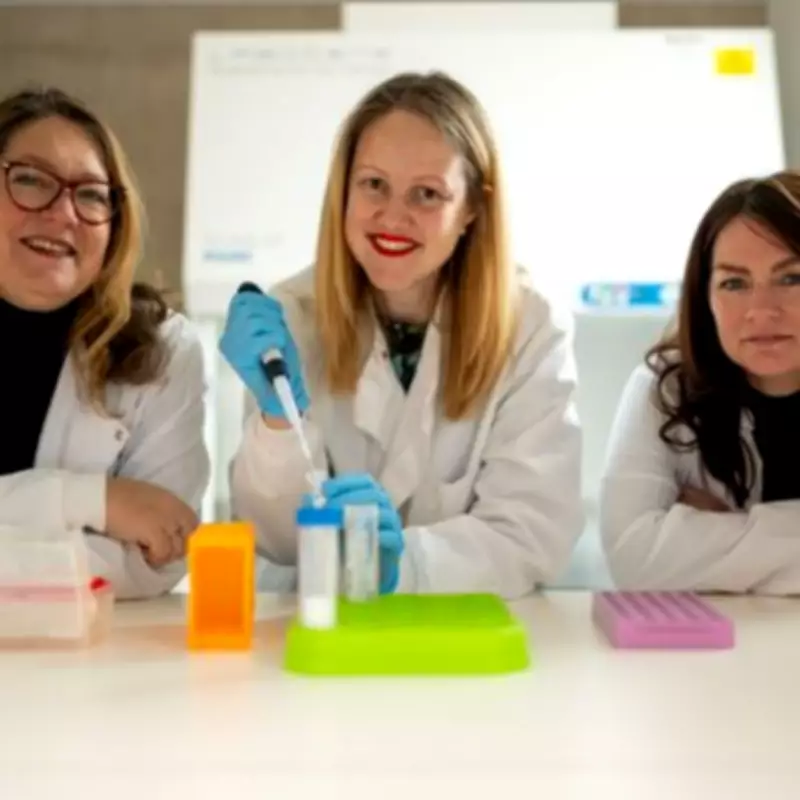
Cardiff Medtech Innovator MeOmics Secures Major Funding Injection
A pioneering Cardiff-based medical technology company has received a significant financial boost to advance its groundbreaking work in precision psychiatry. MeOmics Precision Medicine has successfully secured a £300,000 investment round through a joint initiative involving Angels Invest Wales and Women Angels of Wales.
Strategic Investment for Platform Development
The substantial funding injection will enable the innovative firm to accelerate its proprietary platform development and enhance data generation capabilities. Furthermore, the company plans to expand its workforce by hiring additional technical staff to support its ambitious growth trajectory.
Established in 2021 as a spin-out enterprise from Cardiff University, MeOmics has developed a unique approach to drug discovery testing for complex mental health conditions including schizophrenia. The company utilises advanced stem cell-based techniques to identify patients' specific biological types, allowing for more targeted therapeutic development.

Investment Breakdown and Support Structure
The comprehensive funding package comprises several key components:
- £125,000 equity investment from Women Angels of Wales, led by data expert Sara Boltman
- £125,000 match funding from the Wales Angel Co-Investment Fund
- £50,000 contribution from existing investors
This latest financial support follows a previous £25,000 grant awarded by the Welsh Government through the Smart Flexible Innovation Support programme. The company's initial establishment was backed by an Innovate UK grant and received support from healthcare partners including St Andrew's Healthcare.
Transforming Mental Health Treatment Approaches
Lucy Sykes, Chief Executive of MeOmics Precision Medicine, emphasised the transformative potential of their technology. "The complexity of mental illnesses means it's exceptionally challenging to develop new therapies that work effectively for all patients," she explained. "Incorrectly applied treatments can lead to debilitating side-effects for individuals while creating substantial costs for the NHS."
Sykes further elaborated on their innovative approach: "Our technology enables us to achieve in psychiatry what has been successfully implemented in oncology. We help drug developers match their treatments not just to broad patient populations, but to targeted groups based on their underlying biological characteristics."
Regarding the investment, Sykes added: "This support from Angels Invest Wales and Women Angels of Wales will help us optimise our platform for customers, expand our partnerships and grow our team as we progress toward commercialisation."
Investor Perspectives and Ecosystem Support
Sara Boltman of Women Angels of Wales, who led the investment, commented: "As someone with a data background, I was particularly interested in the innovative work being undertaken by Lucy and the MeOmics team. This represents my first lead investment opportunity, and I'm delighted we can support another female founder in Wales's thriving medtech sector."
Carol Hall, Co-Investment Network Manager at the Development Bank of Wales, praised the company's contribution to the regional innovation landscape. "MeOmics Precision Medicine exemplifies the quality of businesses operating within Wales's medtech ecosystem. We were pleased to support Women Angels of Wales's investment and welcome Sara Boltman's expertise as lead investor," she stated.
Supporting Women in Early-Stage Investment
Women Angels of Wales, established to promote female participation in Wales's early-stage investment community, receives joint support from the British Business Bank and the Development Bank of Wales. The syndicate has access to co-investment opportunities of up to £350,000 per deal from the Development Bank's £8 million Wales Angel Co-Investment Fund.

The company's testing methodology represents a significant advancement in pharmaceutical development, allowing for more precise drug targeting while minimising clinical trial failure risks and reducing the likelihood of ineffective treatment selection for patients.