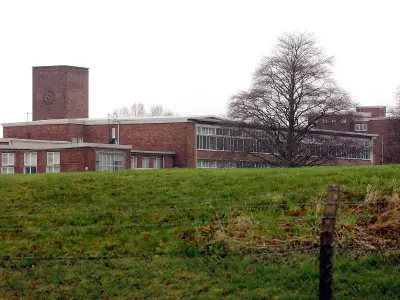
Solihull School's Dramatic Transformation: From Crisis to Most Improved in England
When headteacher Steve Huntington first stepped into Smith's Wood Academy three years ago, he encountered a school in deep crisis. Corridors were filled with students skipping lessons, truancy rates were alarmingly high, and children rarely smiled or spoke. The Solihull secondary school had been rated inadequate in every area and placed in special measures, carrying a poor reputation throughout its community.
Today, the Windward Way school presents a completely different picture. As part of the Fairfax Multi-Academy Trust, Smith's Wood Academy has been recognized as the most improved school in England following a comprehensive transformation that has reshaped every aspect of school life.
A School Reborn: From Unsafe to Exemplary
"It was not safe out here," Mr. Huntington states matter-of-factly as he walks through what are now clean, quiet corridors. "It was the hardest school I've encountered, starting from as low a point as you can imagine. My job was simply to come in and fix it."

The principal, who began his career as a PE teacher, reflects on the school's troubled past: "At times, it wasn't safe. There were no norms, no stability. The kids were just unhappy and they didn't smile, they didn't speak. Now it's a nice place to be."
The latest Ofsted report, published this month, shows the school has achieved 'expected standard' ratings in key areas including leadership, behavior, and attendance. Remarkably, no other school in the country has shown such significant improvement under Ofsted's new inspection framework that began last November.
Changing the Culture: Belief and Boundaries
The transformation began with what Mr. Huntington calls changing the "belief culture." Both staff and students needed to understand that turning the school around was possible. "We have got the belief that we can get there," he explains. "Now, students and parents have got to believe that they can compete with any other kid in the country."
This cultural shift was supported by implementing "tough love boundaries" to address behavioral issues. The school introduced structured systems including reset conversations for students struggling in class, designed to provide support before removal becomes necessary.
Two current students, both aged 14, shared their contrasting experiences. Tia Collins, who aspires to become an anthropologist, recalls: "Things were a bit rocky when I first started. It was quite chaotic in year 7 because you definitely had people who didn't behave. There were people who were truant, people who would disrespect the teachers."
Ollie Gregory, who wants to be a graphic designer, adds: "It seemed like there were more out of lessons than in lessons when we first started."
Comprehensive Improvements and Community Support
The school's transformation extends beyond behavior management. Significant investments have been made in facilities and opportunities for students. A £10,000 investment has revitalized the library, including hiring a full-time librarian. The school now boasts a large careers hub, hosts regular careers fairs, and offers swimming as part of PE alongside a fully-equipped fitness centre.
Mr. Huntington emphasizes the importance of broadening students' horizons: "A lot of them won't have been to a theatre. Some of our kids have never seen the seaside. We offer trips to universities and the Brilliant Club to raise their aspirations."
Practical changes have also addressed logistical challenges. Students now have staggered lunch times to prevent overcrowding and reduce conflicts between year groups. Six different activities are offered during break times to keep students engaged, and all new year 7 students receive free uniform and stationery packs, acknowledging the deprivation in the local area.
A Team Effort with Ongoing Challenges
The principal is quick to credit the entire school community for the transformation. "Every single person who does their job well on a daily basis is why we are where we are today," he says. "We're a normal school now, and on an even keel, but school improvement never ends."

Despite the remarkable progress, the school still faces challenges shaking off its historical reputation. "There are some minorities who are just 'anti-the school,'" Mr. Huntington acknowledges. "We have just got to drown out the noise and be as positive as we can."
The contrast between past and present is stark. Where once students might have responded with expletives when asked to move aside, they now wait politely and say thank you. Where classrooms were frequently disrupted by behavioral issues, teachers now enjoy respectful engagement from students focused on their education.
Mr. Huntington summarizes the journey: "It was, without doubt, the biggest challenge to get out of special measures. For us to get it to where it is now, it's a phenomenal transformation." The school that was once considered unsafe and inadequate now stands as a testament to what dedicated leadership, committed staff, supportive parents, and determined students can achieve together.