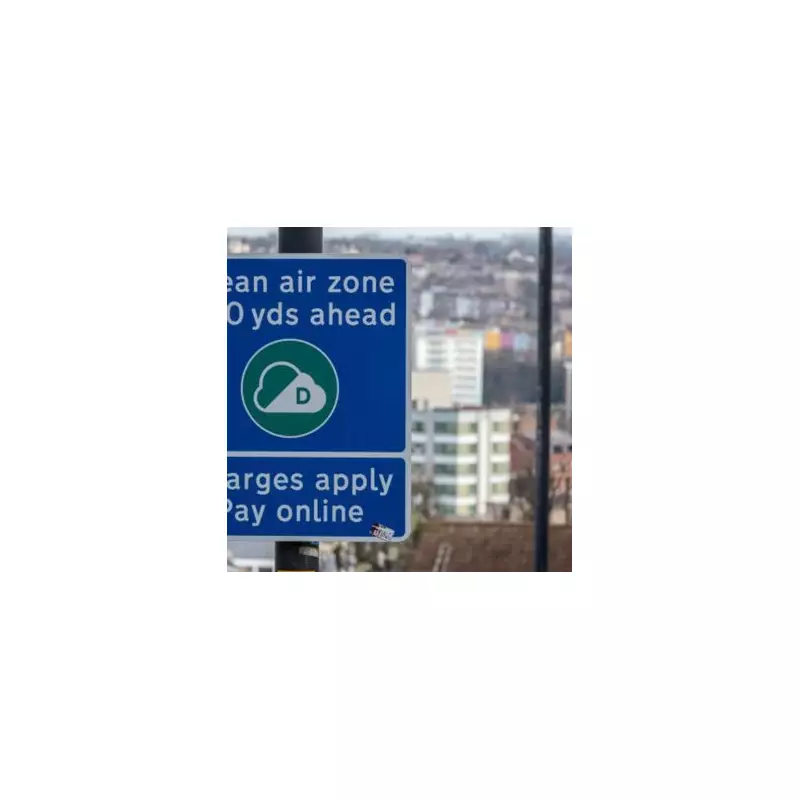
British drivers are threatening to give certain urban centres a 'wide berth' following a stark prediction that Clean Air Zones (CAZs) will proliferate across the country in 2026.
Expansion of Charging Zones Inevitable
Graeme Stoker, marketing director at GoShorty, has warned that local authorities are under significant pressure to meet air quality targets. This pressure makes the spread of Clean Air Zones highly likely. "Clean Air Zones are likely to become more common," Stoker stated.
He explained that this expansion will see drivers of higher-emission vehicles facing increasing daily charges to enter a growing number of towns and cities. The policy is designed to accelerate the transition towards electric vehicles and other cleaner travel alternatives.

Current Zones and Motorist Backlash
CAZs are already operational in several UK regions, including Bath, Birmingham, Bradford, Bristol, Portsmouth, Sheffield, and Tyneside (Newcastle and Gateshead). However, the prospect of more zones has ignited fierce criticism from many motorists.
In response to the warning, one angry driver questioned the scheme's motives: "Just another form of tax... if the deterrent worked they would raise less money." Another branded the zones "big con tricks," while a third argued, "It’s just fake reasons for taxing drivers. Modern cars are not particularly polluting."
Drivers Plan Boycotts Amid 'Net Zero' Criticism
The frustration has led to calls for direct action, with one motorist advising: "Best give those areas a wide berth and spend your money elsewhere." This sentiment reflects a broader scepticism towards the environmental rationale behind the zones.
Some comments extended to criticising the government's wider environmental goals. One person dismissed modern air quality concerns, sarcastically suggesting officials "wouldn't know clean air even if they were given a sample in a bottle." Another controversially labelled the Net Zero target as "a load of... a crock," accusing the government of "brainwashing" the public.
As 2026 approaches, the tension between public health policy and motorist discontent is set to intensify, with the rollout of new Clean Air Zones likely to remain a deeply divisive issue.