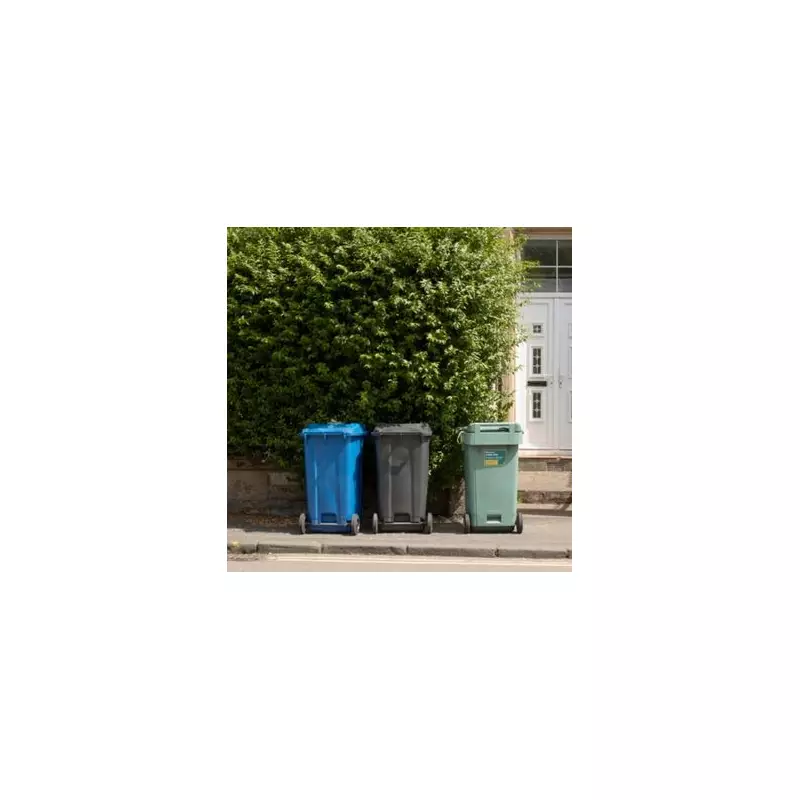
Millions of households across the United Kingdom are set to receive two new bins as part of a major government-led overhaul of recycling and waste collection services.
What is Changing and When?
The sweeping changes, introduced by the Labour government under its Simpler Recycling initiative, will come into full force on 31 March 2026. From this date, waste collectors across England will be legally required to collect four distinct types of waste separately from all homes, including flats.
The four mandatory streams are:

- Food and garden waste (collected weekly, free of charge).
- Paper and card.
- Other dry recyclables (glass, metal, plastic, and cartons).
- Residual waste (non-recyclable rubbish sent for energy recovery or landfill).
The New Bins for Households
Ahead of the 2026 deadline, the government has confirmed that two bins will be provided to each household specifically for food waste. This will consist of a small kitchen caddy and a larger outdoor bin for collection.
Official guidance clarifies that while liners for the caddies are not mandatory, if residents choose to use them, they should "promote the use of liners that have the lowest carbon and wider environmental impacts." There is no obligation for local authorities to supply these liners.
Implications for Homes and Businesses
The Simpler Recycling legislation aims to standardise practices nationwide, ending the postcode lottery of what can be recycled. For most, this will mean having separate containers for general refuse, mixed recycling, and food waste.
A key stipulation is that paper and card must be kept apart from other recyclables, unless a waste collector can provide a specific assessment justifying their mixing. Furthermore, all food waste must be recycled, with the exception of liquids.
The government acknowledges that some smaller businesses or households producing minimal food waste may wish to share a collection service or contract a less frequent pick-up to manage the new requirements effectively.
This national policy shift, kick-starting in spring, represents the most significant change to UK household waste management in years, with the goal of increasing recycling rates and reducing the amount of rubbish sent to landfill.