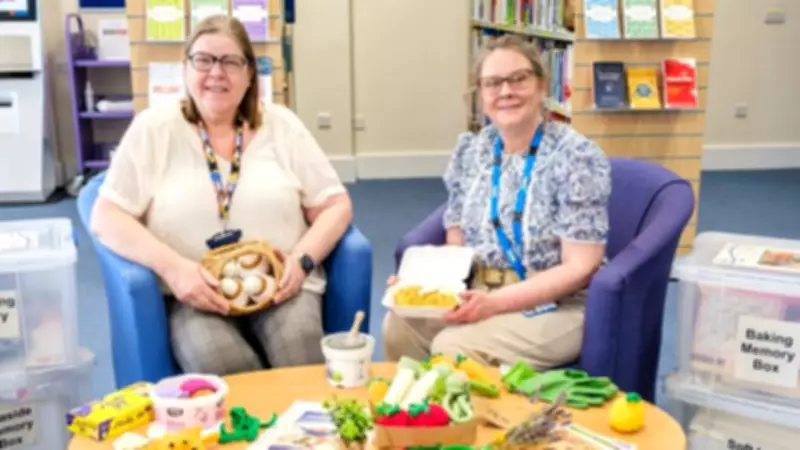
A unique project involving beautifully intricate and tactile knitted props is helping dementia patients delve into the past. Carrots, leeks, tiny tomatoes on the vine, and even cabbages have been crafted out of wool by a creative community group. Rather than being used as children's playthings, these vegetables form part of a memory box of garden-themed items used by occupational therapists in their work with patients.
Staff members at Derbyshire Healthcare NHS Foundation Trust have been hard at work sourcing items from charity shops, donations from friends and family, and a Facebook-based knitting group to create the boxes. The initiative was launched during Dementia Awareness Week (May 18 to 24). The boxes are cared for by the Trust’s librarians, Marie Hickman and Emma Bayliss.
Marie said: "We knew of other trusts who had them, and Emma was particularly keen to take on the project, so we started collecting things. We have done it on a shoestring budget, with a lot donated by the Hookers and Clickers knitting group. We tell them the themes we want and the next thing we know, they’ve created these beautiful things!"

Each box contains captivating items that range from a seaside box complete with knitted fish and chips, to an afternoon tea box featuring a knitted Battenberg cake. There is even a pet box containing a toy dog, basket, bowls, and laminated pictures of dogs to use as conversation starters.
Emma commented: "This is just the start of the project; we are hoping to expand the collection to cover a much wider range of cultures and interests. We’ve started an Islam box with a mat, incense, hat, scarf and pictures; we’ve got a box of football-themed items being donated by someone from Derby County and we would like a shed box with knitted tools, boxes from different decades and perhaps a nature box."
The boxes will be available for trust staff, primarily occupational therapists or those who work with groups out in the community, to borrow and share with dementia patients. Using the items can improve a patient’s mood, self-esteem and social interaction, helping them engage with their past to feel more comfortable and reduce anxiety.
Amanda Mitchell, advanced clinical occupational therapy lead practitioner, uses the boxes with patient groups. She said: "We use them in organised formal reminiscence sessions where we pick a topic and bring in a memory box to start conversations. But we also use them as conversation starters because it can be hard for dementia patients to start conversations. The longer-term memory stays intact for longer, so they are great for that; the boxes are full of recognisable objects that bring memories to life."
"The seaside box is really popular, as is anything to do with holidays," Amanda continued. "Using these things can reduce levels of agitation and really calm our patients. We love them!"
The Hookers and Clickers group have also made several 'twiddle muffs' for the patients. Emma explained: "Twiddle muffs are knitted muffs with items attached to them to keep dementia patients’ hands active and busy. They contain strands of ribbon, or beads and various fabrics inside and out to create visual, tactile and sensory stimulation while keeping the patient’s hands warm at the same time."
Glenda Youde from the Hookers and Clickers group said her knitters love the challenge of creating the items. "When Emma asks us to make something in particular, our first port of call is to look for a free pattern online – there’s so much out there. If we can’t find one, then there are several of us who really like just trying to create it ourselves without a pattern," she said. "If it’s really complicated then often it just comes to me. I made the fish and chips! We love doing it and we love to help out."
Both librarians say they can no longer walk past a charity shop without spotting something ideal for their project. "We are constantly thinking, that would be good for this box, or we could start a new one on that theme!" joked Marie. If you have any items that could be useful for the boxes, particularly items from different cultural backgrounds, you can contact Marie or Emma at dhcft.kingsway.library@nhs.net or 01332 980105.