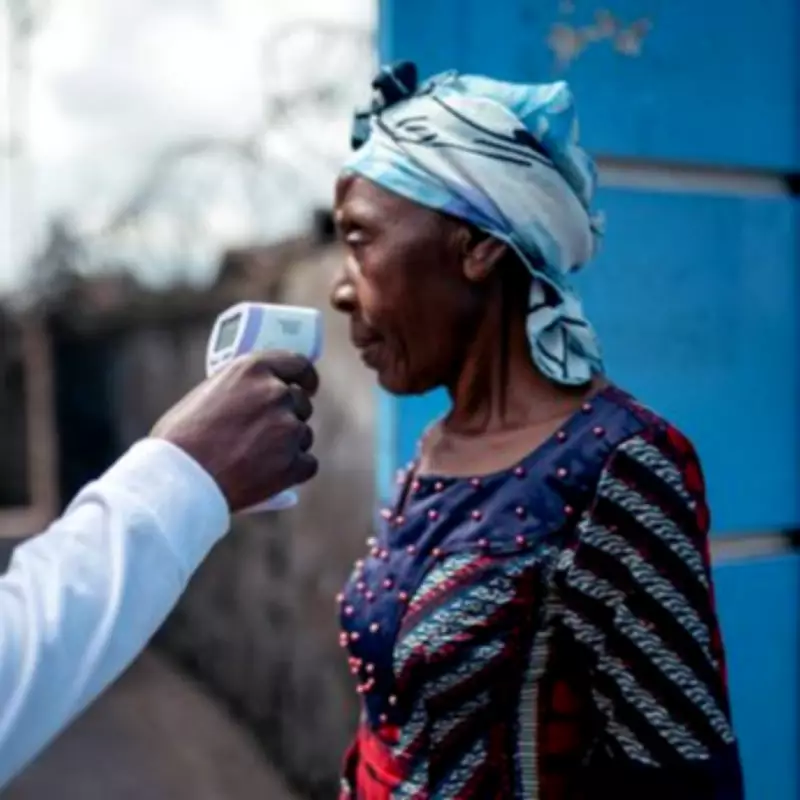
Health authorities are on high alert following a new Ebola virus outbreak in Africa that has already spread beyond the continent's borders. Ebola, which triggers fever, vomiting, and catastrophic internal bleeding, can prove fatal within just 24 hours of infection.
Current Situation in Eastern Congo
More than 130 people are believed to have lost their lives, with upwards of 500 suspected cases recorded during the Ebola outbreak in eastern Congo, according to an alarming update from the country's health ministry. An American citizen has also been confirmed as a case, having been exposed to the virus while working in the DR Congo. That individual has tested positive and has since been flown to Germany for treatment, according to the Centres for Disease Control and Prevention (CDC). The infected American is currently being treated in a specialist isolation ward at Charité hospital in Berlin.
At least six Americans are reported to have been exposed to Ebola. Six further individuals have been identified as high-risk contacts and are expected to be transferred to Europe to undergo strict quarantine measures, reports the Mirror.

Expert Warning from Ebola Survivor
As the world grapples with yet another major health crisis, an American doctor who contracted Ebola while treating patients during the 2014 outbreak has spoken out on the situation. Dr Craig Spencer told American broadcaster ABC News that he is "certain" the current outbreak is "much bigger" than the figures currently suggest.
"My biggest concern about this outbreak is that we learned way too much way too quickly for this to be anything but really bad," Dr Spencer said. Dr Spencer tested positive for the deadly virus after treating patients in Guinea in 2014 while working for Médecins Sans Frontières, also known as Doctors Without Borders. Upon his return to the United States, he spent 19 days receiving treatment at Bellevue Hospital in Manhattan, New York.
"I was lucky enough to survive. And then a few months later, I went back to Guinea. As an epidemiologist helping run the national response for Doctors Without Borders in early 2015," Dr Spencer said. When questioned about whether he would consider offering his assistance with the current Ebola outbreak, he said: "I've already put my family through quite a bit. We'll see what comes out of this, but I'm happy to help."
Dr Spencer told ABC News that the American doctor who has recently contracted the disease weighs heavily on his mind. "I unfortunately know exactly what it feels like to be in that situation, to be incredibly fearful, to have a disease that maybe you've seen the impact of and know that there's not a treatment for," Dr Spencer said, adding: "I'm thinking of him and his family."
Criticism of US Response
Dr Spencer continues to practise emergency medicine as an A&E doctor, while also serving as a professor of public health at Brown University. He further noted that US president Donald Trump's decision to withdraw America from the World Health Organisation (WHO) has left the country ill-prepared to tackle the latest Ebola outbreak — one of Trump's first moves upon resuming office last year. Dr Spencer's remarks come shortly after US Secretary of State Marco Rubio took aim at the WHO on Tuesday (May 19), telling journalists that the international health body was "a little late" in detecting the deadly Ebola outbreak in Africa.
"The lead is obviously going to be CDC and the World Health Organisation, which was a little late to identify this thing unfortunately," he said, via the Guardian. Rubio went on to say that the United States - which pledged around £9.7 million (USD$13 million) in aid despite sweeping cuts to foreign assistance last year - was hoping to establish approximately 50 clinics to treat Ebola in the DR Congo.
The US withdrawal from the WHO also resulted in the global health body losing nearly a quarter of its workforce – around 2,000 positions – from a total headcount of approximately 9,400 staff. Trump's decision to pull the US out of the WHO is a move that has been characterised by experts - most notably Georgetown University professor of global health Lawrence Gostin - as "sowing the seeds of the next pandemic".