Fried eggs are a breakfast staple, but achieving perfect results can be tricky. The whites often crisp up too quickly while the yolk remains undercooked, or the whole egg breaks apart in the pan. However, experts reveal a simple tweak that makes all the difference—and it doesn't require butter or olive oil.
One of the easiest ways to improve your fried eggs is by adding a small amount of water to create steam in the pan. This technique, known as 'steam frying', gently cooks the top of the egg while the base crisps up, helping the yolk achieve a perfectly set, slightly jiggly texture. Express writer Katherine McPhillips tried the method and found that the steam also reduced the intensity of the heat at the bottom of the pan, allowing the whites and yolk to cook more evenly while still keeping those sought-after crispy edges.
Why Steam Frying Works
Traditional frying often exposes the underside of the egg to direct heat, meaning it cooks much faster than the top. This can lead to burnt edges and a rushed attempt to remove the egg too early, leaving the centre too soft. While some try to flip the egg to cook it through, this can easily break the yolk and spoil the texture, Katherine added.

Instead, adding a splash of water and covering the pan with a lid creates steam that cooks the surface evenly, without the need to flip it. The added moisture also helps regulate the temperature, ensuring a more balanced cook throughout.
Perfect Crispy Egg Recipe
To try this method at home, you will need:
- One egg
- A teaspoon of sunflower oil
- Salt and pepper
Be careful about the cooking fat you choose. While butter adds plenty of flavour, it tends to burn very easily and can leave a bitter taste if it does. Oil is much more forgiving, and sunflower oil is highly recommended due to its high smoke point, meaning it will not begin to smoke or burn at a high heat. Olive oil can be used as a backup, but extra virgin olive oil should be avoided if possible, as it has a lower smoke point and is much more likely to burn the egg.
To begin, set the stove to a medium heat, add the sunflower oil, and let the pan heat through for exactly one minute before adding the egg. If the frying pan is too cold, the egg will simply spread out and ruin its shape, but if the pan is left for too long, it will overheat and burn the base.
Cracking the egg into a small bowl before sliding it into the pan is a useful trick. This helps prevent stray pieces of shell from getting into the food and makes it much easier for the egg to keep its round shape.
Let the egg fry normally for one or two minutes until the whites begin to set, and then pour a small amount of water directly into the pan. Immediately cover the pan with a lid and let it steam for one minute more, until the yolk looks perfectly cooked but still jiggly. Once the egg is ready, remove it from the heat and finish with a sprinkle of salt and pepper. Seasoning an egg too early while it is still raw can draw out the moisture, which causes the whites to thin out and become dry during cooking.
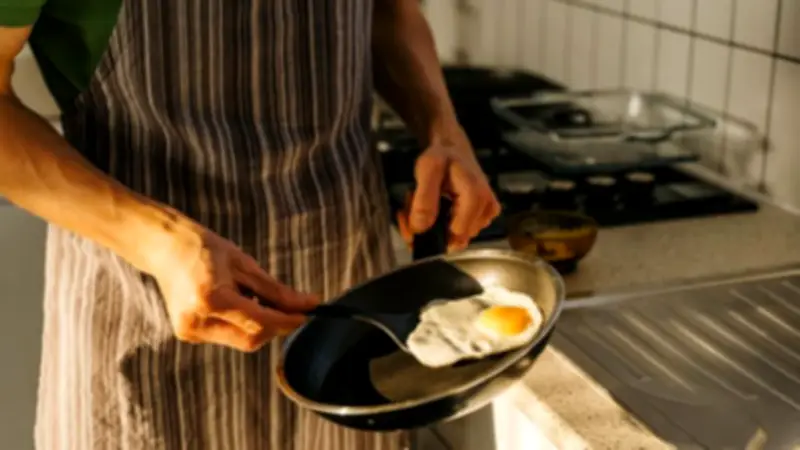
Then it's time to slide your egg out of the pan onto your plate (or toast!). The finished egg should boast perfectly crispy edges alongside a tender, fully cooked yolk.