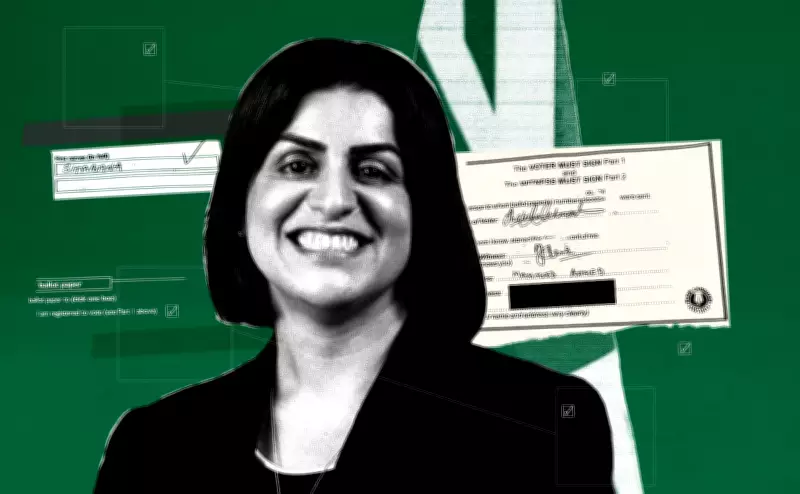
Shabana Mahmood, the Home Secretary, had her postal ballot examined in a high-profile vote-rigging trial that concluded there was widespread fraud in two wards during the 2004 Birmingham city council elections. The elected candidates were forced to step down and were banned from office for five years. The case centered on signatures that did not match, raising allegations of ballot-tampering. Documents obtained by The Dispatch show that Mahmood's signatures on her postal vote application and the declaration of identity differ markedly.
Mahmood's special adviser at the Home Office threatened to sue The Dispatch for defamation and breach of privacy, and sought an injunction to prevent publication. The adviser initially explained that Mahmood used two different signatures at the time. When The Dispatch proceeded with the story, a spokesperson for Mahmood stated that she signed both documents, which are in her own handwriting, and that false allegations about her father signing them were dismissed over twenty years ago.
The Vote-Rigging Trial
The special election court case arose after six local Labour politicians were accused of forgery, ballot manipulation, and theft to rig thousands of votes. Richard Mawrey KC, the presiding election commissioner, said the evidence would disgrace a banana republic. He found corrupt and illegal practices by Labour Party respondents and their agents that likely affected the election outcome. Mahmood Ahmed, Shabana's father, was Labour's election agent in Bordesley Green, one of the two wards involved. Ahmed witnessed three declarations of identity, including Shabana's, which became evidence in the case.

The spokesperson denied that Ahmed signed on others' behalf, stating the matter was tested in court and dismissed. However, Mahmood Ahmed is not named in Mawrey's 100-page judgment, nor does Mawrey address or dismiss allegations against him.
The Signatures
On Shabana Mahmood's postal ballot application, her name is printed at the top, and the signature field includes a reminder that each person must sign their own form. Her name is written out in full in a neat, curvy script. On the declaration of identity, however, her signature is strikingly different—a loopy cursive where the m of Mahmood overlays her first name and the d ends with a flourish. The form is witnessed by her father.
When asked about the discrepancy, Mahmood's spokesperson did not deny the difference but said she used two different signatures. No explanation was given for why she would use a different signature on a document meant to verify identity based on the application.
The Schedule and Evidence
The court examined irregularities in Aston and Bordesley Green. Volunteers analyzed postal vote applications and declarations, recording mismatched signatures in a spreadsheet called the schedule. Justice Mawrey examined fifteen types of fraud in Bordesley Green, noting over 1,600 postal votes cast for Labour where signatures differed. Handwriting analyst Micheal John Allen confirmed mismatches in 201 sets of documents. Mahmood's papers were not in Allen's sample but were in the schedule compiled by Barbara Holland, a Labour member who impressed the judge as careful and thorough.
Holland and her husband provided Mahmood's records to The Dispatch due to concerns about her recent efforts to restrict migrants' rights. They questioned the record of Mahmood's family given her statements about migrants' involvement in communities.
Legal Threats
Shabana Mahmood's special adviser Joshua Williams sent a three-page letter threatening lawsuits if The Dispatch published the story. The letter demanded a promise not to name any member of the Home Secretary's family or imply electoral fraud. It reserved the right to issue proceedings for defamation and misuse of private information and seek an injunction. The Dispatch responded, confirming publication and asking for an explanation of the handwriting discrepancy. Williams later clarified that his correspondence was as an adviser, not on behalf of the Home Office, and did not repeat the legal threats.