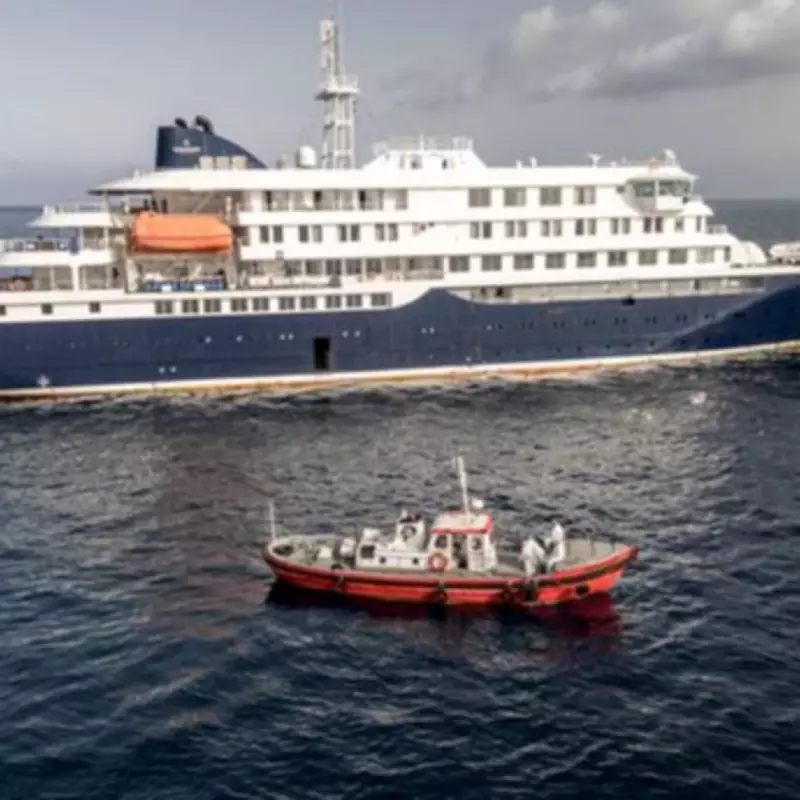
The Canary Islands have refused docking permission to the MV Hondius cruise ship, which is grappling with a suspected hantavirus outbreak. Regional leader Fernando Clavijo firmly rejected the proposal, calling for an urgent meeting with Spanish Prime Minister Pedro Sanchez.
Passengers remain stranded aboard the Dutch-flagged vessel following an outbreak of hantavirus, with three lives already lost. Plans had been under consideration to bring the ship into port at the Canary Islands after days at sea, but Clavijo stated: "This decision is not based on any technical criteria, nor is there sufficient information to reassure the public or guarantee their safety. I cannot allow it to enter the Canary Islands."
The Spanish government had previously said there is a "moral and legal obligation" to allow passengers to disembark in the Canary Islands. British nationals are among those stranded aboard. A British passenger and a British crew member were taken ill during the suspected outbreak.

Prime Minister Sir Keir Starmer confirmed arrangements were being made for the "safe onward travel" of British nationals on board. The ship is currently positioned off the coast of Cape Verde, where authorities had hoped to carry out medical evacuation of a British crew member, alongside a Dutch colleague and another passenger.
In an update on Tuesday evening, Cape Verde's health ministry announced that the evacuation of three patients would be carried out within hours using two air ambulance aircraft. "One of the air ambulance planes is already in Cape Verde, and a second aircraft is expected to arrive soon," they said. "A medical specialist will also arrive to assist the occupants on board the ship. Once the evacuation process is complete, the ship should resume its journey."
The vessel is expected to continue its voyage after the evacuation, but tour operator Oceanwide Expeditions will likely need to revise plans after the Canary Islands confirmed they could not dock there. One expert suggested that once the ship docks, remaining passengers and crew will probably be assessed and then "be taken into a period of quarantine."
Health authorities are investigating the source of the virus, with some suggesting a "mixture" of transmission, including close contact between passengers. Experts indicated initial infections were likely contracted off the ship, with suspected human-to-human transmission among those with "really" close contact, such as cabin mates.
Sir Keir said: "My thoughts are with those affected by the hantavirus outbreak onboard the MV Hondius. We are working closely with international partners to support British nationals on board and we're putting plans in place for their safe onward travel. The risk to the wider public remains very low – protecting the British people is our number one priority."
Around 19 British nationals were listed among passengers aboard the vessel, which was traveling from Argentina to Cape Verde, alongside four British crew members. Passengers have been confined to their cabins while "disinfection and other public health measures are carried out," the World Health Organisation (WHO) confirmed.
Crew members reportedly require "urgent medical care" after developing acute respiratory symptoms, according to Oceanwide Expeditions. Meanwhile, the British passenger struck down by hantavirus is "understood to be improving" but remains in intensive care in Johannesburg, having been medically evacuated on April 27.
A total of seven suspected cases have been identified, including three deaths. Two of these cases have been confirmed as hantavirus. Dr Maria Van Kerkhove from the WHO said: "As of today, seven individuals of the 147 passengers and crew have been reported ill, sadly, three have died. One patient is in intensive care in South Africa, although we understand that this patient is improving while two patients are still on board the ship and are being prepared for medical evacuation to the Netherlands for treatment."

Medical teams from Cape Verde are supporting the ship and have brought personal protective equipment (PPE) on board, while health authorities work to establish the source of the outbreak. Dr Van Kerkhove explained: "The initial patient and his wife joined the boat in Argentina. With the timing of the incubation period of hantavirus, which can be anywhere from one to six weeks, our assumption is that they were infected off the ship, perhaps doing some activities there. This was an expedition boat, and many of the people on board were doing bird watching, they were doing a lot of things with wildlife. So our assumption is they were infected off the boat and then joined the cruise. However, we do believe that there may be some human-to-human transmission happening among the really close contacts – the husband and wife, people who have shared cabins, etc."
A Dutch passenger lost their life aboard the vessel on April 11. Subsequently, on April 27, the passenger's wife also passed away, with authorities confirming a variant of hantavirus. On May 2, a German passenger on board also died, though the cause of death is yet to be established.
Hantavirus, predominantly transmitted through contact with infected rodents' urine or faeces, can result in severe respiratory illness and may prove fatal. Although uncommon, hantavirus infections can occasionally be transmitted between individuals, according to the WHO. There is no dedicated treatment or cure, but patients have a greater chance of recovery if they seek medical attention promptly.
Mark Fielder, professor in medical microbiology at Kingston University London, said: "With the current understanding of the ongoing infection and the likelihood that stringent infection control measures are being implemented on board the vessel, it is likely that further ongoing transmission will be limited. The isolation of infected patients, regular handwashing, monitoring of close contacts, and the application of infection control measures will all be critical to limiting and halting onward spread of the disease. Once the ship docks it is likely that arrangements will be made for the remaining passengers and crew to be medically assessed and then be taken into a period of quarantine and monitoring to ensure the control of any infection and provide early medical intervention where needed."