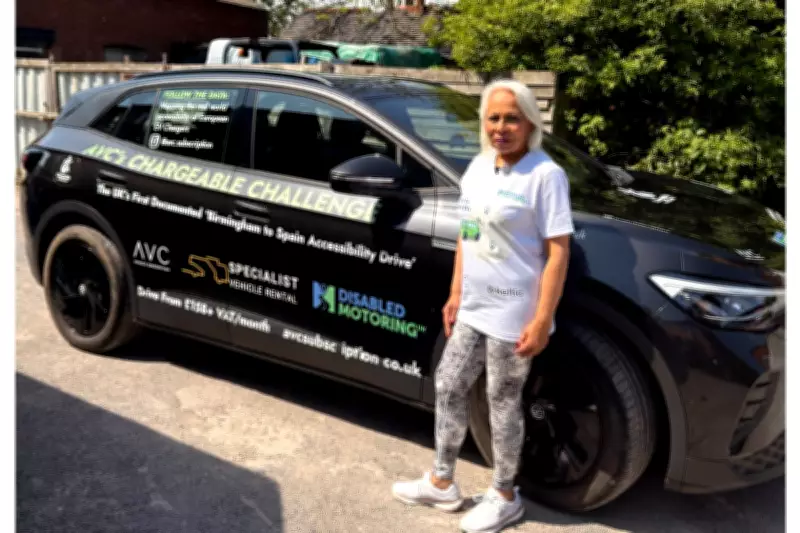
A disabled woman from Wolverhampton is undertaking a 2,800-mile return journey from Birmingham to Spain in a fully electric vehicle to test how accessible electric vehicle travel truly is for people with disabilities.
The Journey and Its Purpose
Ajna Patel, aged 58, a member and trustee of Disabled Motoring UK (DMUK), will set off from Birmingham on Tuesday, 5 May. The project, spearheaded by DMUK, aims to highlight concerns raised by disabled people regarding electric vehicles, including inaccessible charging bays, heavy charging cables, and range anxiety.
Mrs Patel has lived with severe rheumatoid arthritis for over two decades. Her condition is steadily deteriorating, and during severe periods, she has had to rely on a wheelchair. Despite growing pressure to switch to electric vehicles, she has not yet done so due to accessibility concerns and range anxiety.

Testing the Challenges
This journey will put those concerns to the test. Mrs Patel will leave from Accessible Vehicle Club’s Birmingham office with DMUK colleague Zoe Rush, who will provide support throughout the trip. During the journey, Mrs Patel will audit and catalogue the barriers and challenges faced when locating and using EV charging infrastructure, alongside the added complexities of travelling with mobility issues.
The return journey to Alicante, Spain is expected to take six driving days and will require approximately 24 charging stops round-trip.
Call for Inclusive Change
Graham Footer, CEO of Disabled Motoring UK, said: “The transition to electric vehicles is accelerating, and it is vital that accessibility is not treated as an afterthought. For many disabled people, the current charging infrastructure presents significant barriers. By undertaking this ambitious journey, we aim to shine a light on those real-world challenges and push for meaningful, inclusive change across the EV network in the UK and Europe.”
After the project, a report will be created, and the audit results will be placed on Euan’s Guide, a disabled access review website, as well as Google Maps, allowing disabled people to review, share, and discover accessible places.