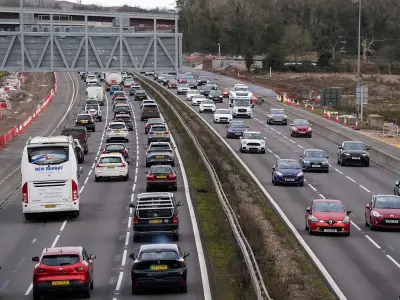
The UK government has unveiled its first national road safety strategy in over ten years, a move hailed as 'long overdue' by regional leaders. Announced by the Department for Transport on Wednesday, 7 January 2026, the strategy sets an ambitious target to reduce the number of people killed or seriously injured on Britain's roads by 65 per cent by 2035.
What's in the New National Road Safety Plan?
The comprehensive strategy outlines a series of proposed measures designed to improve safety for all road users. Key proposals include introducing lower alcohol limits for drivers and the automatic suspension of licences for those accused of drink and drug driving offences.
Other significant plans featured in the document are:

- Penalty points for all vehicle occupants not wearing a seat belt.
- Compulsory eye tests for older drivers.
- A nationwide crackdown on the use of untraceable 'ghost plates'.
West Midlands Pledges to Support National Ambitions
The launch of the national plan follows regional action already underway. In 2024, the West Midlands launched its own Regional Road Safety Strategy, which aims to cut deaths and serious injuries by 50 per cent by 2030, working towards the ultimate goal of 'Vision Zero' by 2040.
West Midlands Mayor, Richard Parker, welcomed the government's renewed focus. "This is the first national road safety strategy in over a decade, and it's a clear sign the government is taking road safety seriously again," he said.
Mayor Parker emphasised the human cost behind the statistics, stating, "I've met families who have lost loved ones in road collisions... every statistic is a person, a family and a life changed forever." He confirmed the region's commitment to its existing measures, including tougher speed enforcement and safer street design, which he said are already making a difference.
A 'Long Overdue' Step Towards Preventing Tragedy
Mat MacDonald, the West Midlands' Road Safety Commissioner – a unique role in the UK – also praised the strategy. He highlighted the trauma for families affected by road crashes and criticised the previous lack of a coherent national plan.
"By accepting that every death on our road network is preventable, and outlining steps to reduce the numbers of people killed and seriously injured in collisions, the government is showing long overdue leadership on this issue," MacDonald stated.
Both regional leaders expressed their commitment to working with the government and other partners to implement the new ideas, with the shared objective of preventing collisions and saving lives on roads across the country.