By John Dempsey
Summer is here, and while our changing climate means it is hard to know exactly what weather we will get, the Sefton Coast will certainly see more visitors. When the weather is settled and hot, thousands of people can descend on this coastline, some travelling from as far as the Midlands, Glasgow, or even the east coast for a day out.
Enjoy the Coast Responsibly
Although the coastline is long enough to absorb large numbers of visitors, it is important that people observe directions to ensure a safe and enjoyable experience, and that this fragile habitat and its wildlife are not damaged or disturbed.

As a Site of Special Scientific Interest, a Special Protection Area, a Special Area of Conservation, and an internationally recognised Ramsar site, the dune system and shoreline enjoy the highest levels of protection on paper. For these protections to translate into physical reality, visitors must adhere to byelaws and treat this landscape with respect.
Key Rules for Visitors
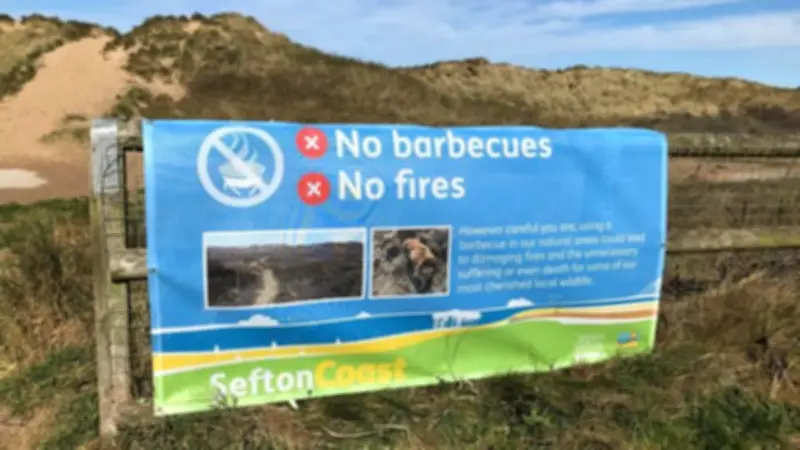
- No BBQs or fires: The risk to visitors and wildlife is too great. A superheated area of sand left by a disposable barbecue can cause horrific burns to children running barefoot, and an ember caught on the breeze can spark fires that destroy large areas of habitat and endanger life.
- No camping: Camping is not permitted anywhere on the coast.
- Dispose of litter properly: Use bins at site entrances or on the beach. If bins are full (they can be emptied up to ten times a day but fill quickly), take your rubbish home.
Dog Owners
Keep dogs under control, out of pools, and away from wildlife, including resting or feeding birds on the beach. All fouling must be picked up immediately. Leaving a used bag by the path or hanging from a branch carries the same fixed penalty fine as leaving fouling uncollected.
Horse Riders
Horse owners should follow the long-established code of conduct: do not bring horses onto the coast two hours either side of high tide, do not enter the dune system, do not gallop, and do not disturb wildlife. Several free websites and apps offer detailed tide information so riders can plan their visit correctly.
John works for Green Sefton, the Sefton Council service that brings together the Coast & Countryside, Parks & Greenspaces, and Grounds Maintenance teams for a joined-up approach to the vital management, development, and oversight of Sefton’s beautiful coastline, parks, and green spaces. This column looks at the flora, fauna, and history of the coastline, and the work carried out to protect it.