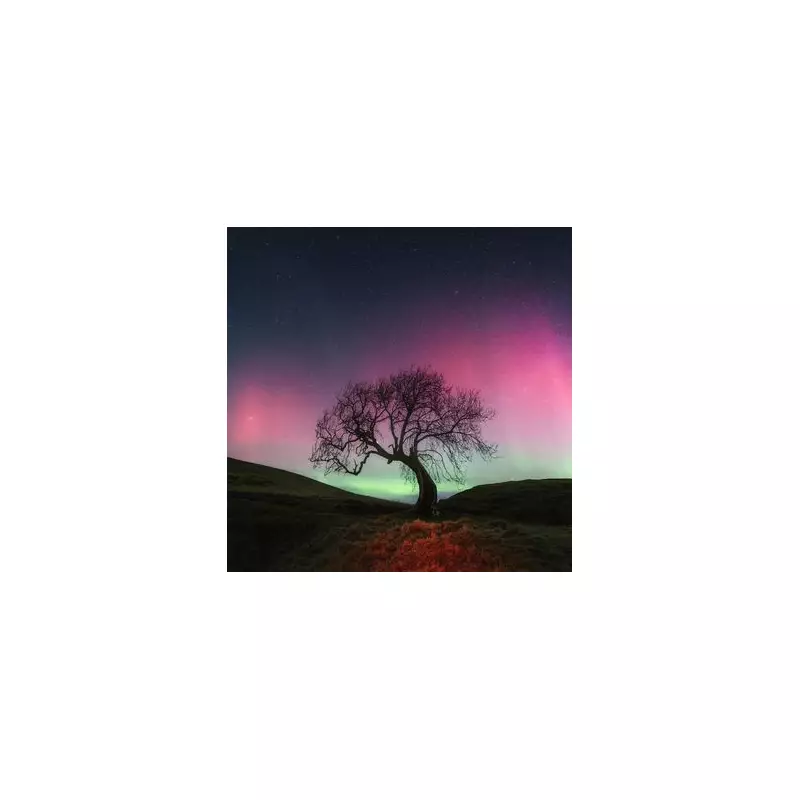
A celestial spectacle could be on the cards for skywatchers across Britain this week, as the Met Office forecasts a potential display of the Northern Lights.
Solar Storm Set to Illuminate UK Skies
The opportunity stems from a significant coronal mass ejection (CME) – a vast eruption of charged particles from the Sun – which departed our star on Sunday, 18 January 2026. This solar material is now racing towards Earth and is expected to arrive either late on Monday, 19 January, or in the early hours of Tuesday, 20 January.
Upon interacting with Earth's magnetic field, these particles can create the famous Aurora Borealis. The Met Office has indicated that the resulting geomagnetic storm could reach G2 to G3 (Moderate to Strong) levels, with a chance of brief G4 (Severe) intervals. This level of activity significantly raises the likelihood of the lights being seen much further south than usual.

Where and When to Look for the Aurora
The prime viewing locations are traditionally Scotland, Northern Ireland, and northern England. However, during strong geomagnetic events, the auroral oval expands, meaning there is a possibility the phenomenon could be glimpsed even further south across the UK.
Visibility hinges on two critical factors: the timing of the CME's arrival and the weather. Krista Hammond, the Met Office Space Weather Manager, provided clarity: "The CME is likely to result in geomagnetic storming, giving the potential to view the aurora. However, sightings are dependent on the CME arriving during hours of darkness and clear skies."
Unfortunately, cloud and rain forecast for Tuesday evening may obstruct views. The clearest potential window is around 4am on Tuesday morning. The Met Office advises hopeful observers to find a dark location away from light pollution, face the northern horizon, and hope for a break in the clouds.
Uncertain Timing Amid Weather Challenges
While the solar activity promises a strong chance of auroral activity, UK observers face a familiar adversary: the weather. Current charts show substantial cloud coverage is expected overnight on Monday and into Tuesday morning, which could diminish the spectacle for many.
This event serves as a reminder of the dynamic connection between our planet and the Sun. For those under a clear patch of sky in the early hours of Tuesday, looking north could reward them with one of nature's most breathtaking displays.