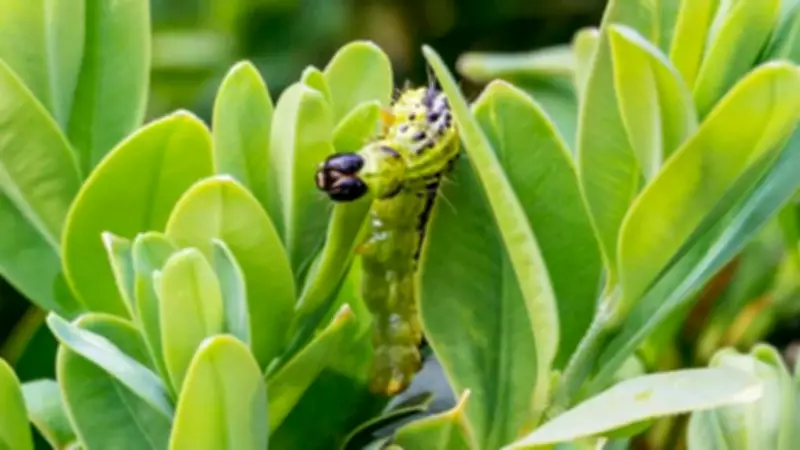
Gardeners across the country are being alerted to a significant pest outbreak that is putting box trees at risk this year. Experts are calling for immediate action after numerous people reported that their beloved plants are being destroyed by caterpillars.
These pests have been moving across Britain since they were first spotted in private gardens back in 2011. While they were once mostly found in the southeast, the insects are now steadily appearing in many more regions. Anyone with box hedging should monitor their plants closely as sightings have already been confirmed this month. One gardener said: "I've seen them for the first time today, and they've killed lots of my plants before. I'm going to spray them immediately."
Rapid Destruction
These eating machines are at their most energetic during warmer weather and can ruin a box plant in as little as seven days, reports Ben Hurst on Devon Live. BBC Gardener's World warned: "There have been reports of birds such as blue tits and jackdaws feeding on the caterpillars, but it's not yet known if this will have any serious effect on numbers."

Monty Don has previously highlighted how difficult it has become to maintain these plants. "Until 10 years ago, box hedges and topiary were almost ubiquitous in British gardens. But the combination of box blight and box moth caterpillar have made one of the stalwarts of the garden look very much under threat, and it may be that fewer and fewer of us can successfully grow box at all," he said.
Glimmer of Hope
Garden writer Kate Bradbury explained that the species arrived in the UK without any natural predators to keep them in check. "What happens with new arrivals is that there are no natural predators to clear them up. In the last 10,000 years, all of our native species have evolved together, and there are natural checks and balances that keep everything in place. When you have something new coming in, it takes a few years for that to settle. But I've seen robins eating the adults. There are various parasitic wasps that are keeping them in check as well. So I have hope that with box tree moths, we start to see populations go back down again."
The lifecycle of the moth means they can remain a constant issue from the spring through to the autumn. BBC Gardeners' World explained: "After around a month, the caterpillar forms a chrysalis which emerges as a box tree moth, which then mates, perpetuating the cycle. Box tree caterpillars can be a problem from spring to autumn, producing multiple generations. The caterpillars overwinter among box foliage, resuming feeding the following spring."
Control Measures
If you only have a few plants, you can try to pick the caterpillars off by hand every day. It is also helpful to use garden shears to remove any stems that have become covered in thin webbing.
Professional biological treatments are available, though these must be applied by specialists when the weather is at least 15°C. Alternatively, pheromone traps can be used to catch male moths and act as an early warning system for your garden.