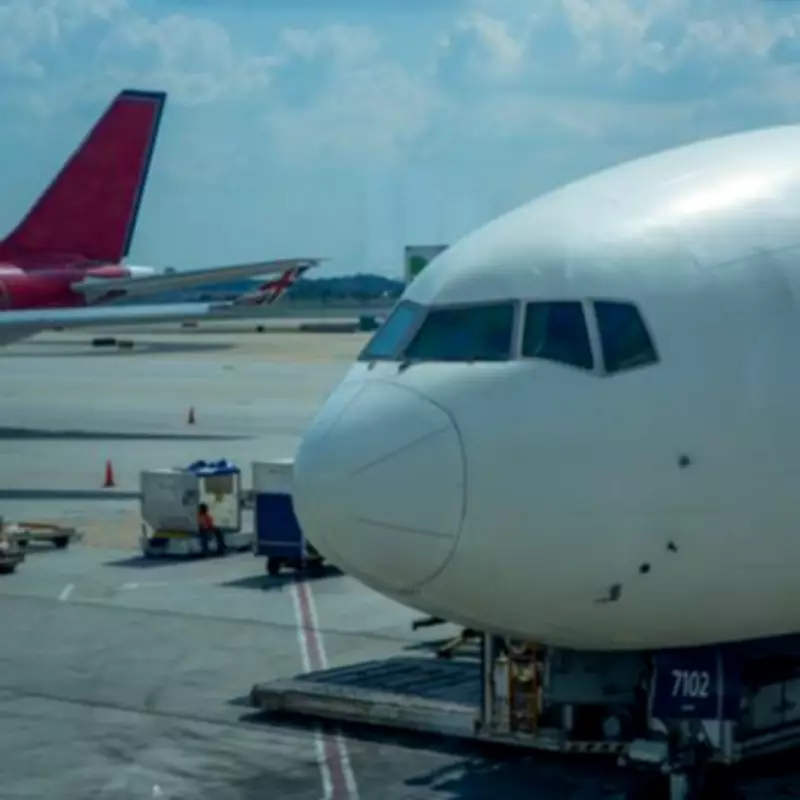
The UK Government has issued an update to reassure passengers amid concerns over potential jet fuel shortages, stating that there is no current need to alter travel plans. The joint statement from the Department for Transport, the Department for Energy Security and Net Zero, and the Foreign, Commonwealth and Development Office emphasised that UK airlines are not currently experiencing a shortage of jet fuel.
What the Jet Fuel Situation Means for Your Travel Plans
The Government confirmed that UK airlines typically purchase jet fuel in advance, and airports maintain stocks to ensure operational resilience. The official update read: "There is no current need for passengers to change their travel plans." It added that authorities are working closely with the aviation industry to monitor risks and minimise any potential disruption.
Is There a UK Shortage of Jet Fuel?
The Government clarified that UK airlines have stated they are not currently seeing a shortage of jet fuel. Supplies are usually bought ahead of time, with airports and their suppliers keeping bunkered fuel stocks to support resilience.

Do I Need to Change My Travel Plans?
According to the update, there is no current reason to change upcoming travel plans. The Government regularly meets with industry stakeholders to monitor risks, understand pressures, and ensure clear communication with passengers should circumstances change. Passengers are advised to continue checking with their airlines before travelling and to consult the FCDO travel advice for the latest updates, as well as ensuring they have appropriate travel insurance.
Are Airlines Cancelling Lots of Flights?
Data from Cirium indicates that 120 UK flights have been cancelled, which represents just 0.53% of planned flights for the month. The Government noted that the majority of these cancellations are to and from the Middle East due to the ongoing conflict. This figure is within the normal range of cancellations expected in a typical year, with the Civil Aviation Authority (CAA) reporting that around 1% of all flights are usually cancelled. For the period from June to August, only up to 0.2% of flights have been cancelled.
How Is the UK Government Protecting Passengers?
Under UK law, passengers are entitled to a full refund or re-routing on an alternative flight if their flight is cancelled and they depart from a UK airport on any airline, arrive at a UK airport on an EU or UK airline, or arrive at an EU airport on a UK airline. For more information, passengers can contact their airline, travel agent, or tour operator, visit the CAA website for guidance on delays and cancellations, or read the air passenger travel guide.
What Action Is the UK Government Taking?
The Government stated that since the closure of the Strait of Hormuz, it has been closely monitoring UK jet fuel stocks and working with airlines, airports, and fuel suppliers to ensure passengers keep moving and businesses are supported. Contingency planning continues, with a focus on securing a long-term solution to restore free shipping through the Strait of Hormuz.
How Are Airlines Being Supported?
At some UK airports, airlines are allocated scheduled times known as 'slots' for take-off and landing. Normally, airlines must use at least 80% of their allocated slots during a season to retain them for the following year, under the 'use it or lose it' rule. However, Airport Coordination Limited, the independent body managing slot allocation at UK airports, has updated its guidance so that airlines will not lose slots if fuel shortages prevent them from flying. Airlines can now apply for an exemption from the rule in such circumstances. The Government is also seeking industry views on slot rules for the summer 2026 and winter 2026 seasons. Temporary measures would allow airlines to consolidate schedules on routes with multiple daily flights to the same destination, enabling better planning and reducing fuel consumption by consolidating passengers onto fewer flights.