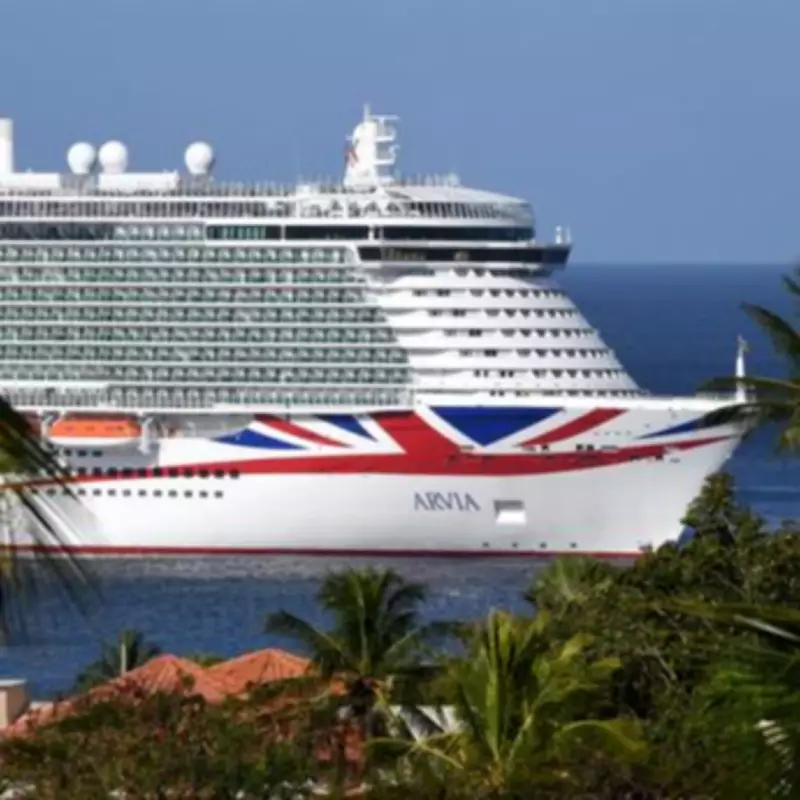
P&O Cruises has announced a new policy regarding sunloungers on its ships, a move that has sparked debate among passengers. The rule, which prohibits reserving loungers for more than 30 minutes, aims to ensure fair access for all guests.
New Regulation Details
The cruise line, catering exclusively to British holidaymakers and offering family-orientated and adults-only voyages, has implemented the change after years of complaints about lounger hogging. A fabric cover on the headrest now bears instructions: "Loungers get lonely. Please don't reserve. If left for more than 30 minutes, belongings will be moved to the lonely lounger pick up point."
Passenger Reactions
One passenger shared an image of the notice on social media, asking if the move was "long overdue" or "a bit over the top." Responses were mixed.

Supporters praised the rule. One commenter said: "We had our 1st cruise in December there was a group of about 7 or 8 older women who did this all the time on sea days! They were fuming when their stuff was removed, it was hilarious, so entitled!" Another added: "Long overdue. I often am looking for a lounger by the pool to have one to dry off after a swim and I can never get one in the sun." A third noted: "This was on Britannia in January and was enforced. The staff went round and put a sticker warning on after 30 minutes, then 30 minutes after that, if the sticker was still there, the towels were removed."
Critics, however, argued the 30-minute limit is too short. One said: "I'm definitely the minority here but personally, I think 30 minutes is unreasonable. I am absolutely fine with an hour... it should be ok for families to go in the pool, maybe grab a drink and queue at the snack bar then head back to the sunbeds... this can take more than 30 minutes!" Another suggested: "An hour would be better, only so people could go grab lunch/food together."
Enforcement and Impact
P&O Cruises has confirmed that staff will monitor loungers and remove belongings after 30 minutes of absence. The rule applies to all ships and is already in effect. The policy is seen as a response to widespread complaints about entitled behavior and lounger monopolization.
As the cruise industry adapts to post-pandemic travel, such measures aim to improve guest satisfaction and reduce conflicts over deck space.